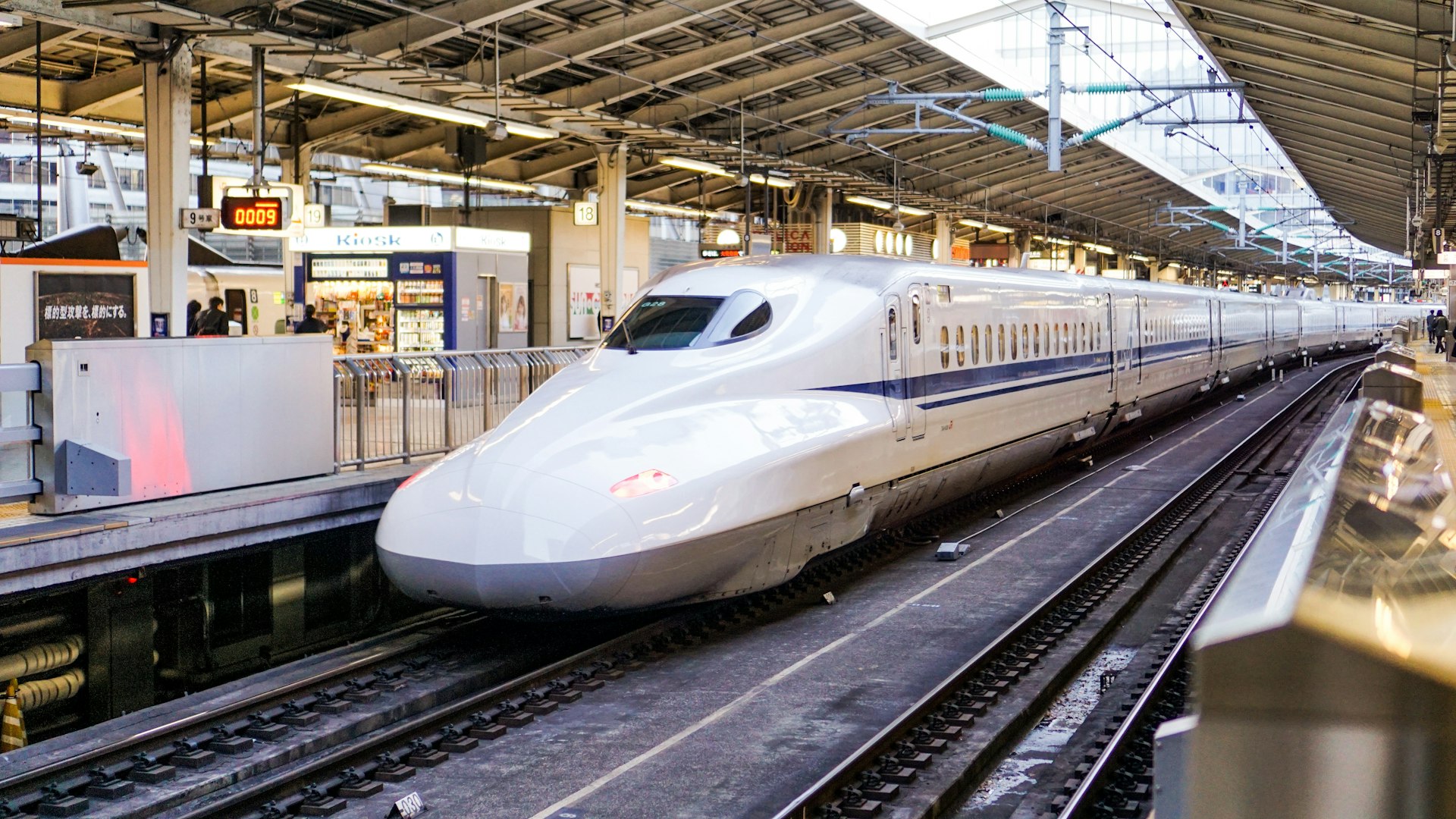
For more than a decade the Japan Rail Pass was the no-brainer answer to “how do I get around Japan?” Then October 2023 happened: a price hike of roughly 70% for the nationwide pass turned a slam-dunk deal into a calculator problem. We still buy it — sometimes. Here’s how we decide, and the regional alternatives that quietly beat it on most trips we actually take.
What the JR Pass Actually Covers
The Japan Rail Pass (often shortened to “JR Pass”) is a flat-rate ticket sold to foreign tourists that gives you unlimited rides on most JR-operated trains for 7, 14, or 21 consecutive days. That includes most shinkansen (bullet trains), JR local lines, the Narita Express, the Tokyo Monorail, and a small number of JR buses and ferries.
What it does not cover trips up nicely:
- The fastest Nozomi and Mizuho shinkansen between Tokyo, Osaka, and Hakata — historically excluded, though a paid surcharge option was added in late 2023 .
- Anything operated by a private railway (Kintetsu, Hankyu, Keihan, Tokyo Metro, Toei, Odakyu Romancecar to Hakone).
- City subways. Tokyo Metro and Toei are private — your JR Pass is a paperweight underground.

That last point trips up most first-timers. If your itinerary is “Tokyo for 5 days, day trip to Kyoto, Tokyo for 2 more days,” you’ll spend most of your transit on Tokyo Metro and JR Yamanote — and only one big shinkansen leg. The pass probably loses.
The 2023 Price Hike: New Math
Before October 2023, a 7-day adult pass cost around 29,650 JPY. After the hike, it jumped to roughly 50,000 JPY — a 69% increase in one stroke. The 14-day and 21-day passes moved proportionally.
The old break-even rule of thumb was “one Tokyo–Kyoto round trip pays for the 7-day pass.” That’s no longer true. A reserved-seat Hikari round trip Tokyo–Kyoto runs about 28,000 JPY — well short of the new pass price. You now need a Tokyo–Kyoto round trip plus meaningful extra travel to break even.
JR justified the hike by pointing to weakened yen revenue, infrastructure costs, and the new Nozomi-surcharge option. Whatever the reason, the calculator changed and most blog math you’ll find online is stale. Always price out your specific itinerary on a fresh fare tool before buying.
When the Pass Still Wins
The pass still wins on long, multi-city itineraries that hit the shinkansen hard. Here’s how three common shapes shake out at post-2023 prices:
| Itinerary (7 days) | Pay-per-ride (JPY) | 7-day JR Pass (JPY) | Verdict |
|---|---|---|---|
| Tokyo only + Hakone day trip | ~8,000 | 50,000 | Pay per ride — pass loses badly |
| Tokyo → Kyoto → Osaka → Tokyo | ~32,000 | 50,000 | Pay per ride — pass still loses |
| Tokyo → Kyoto → Hiroshima → Tokyo | ~55,000 | 50,000 | Pass wins — by ~5,000 JPY plus flexibility |
The pattern is clear: if your itinerary doesn’t push west of Kyoto (Hiroshima, Fukuoka) or wide north (Sendai, Aomori), you almost certainly come out ahead paying per ride. The pass still has non-cash value — unlimited spontaneous rides, no fare-calculator headaches, free seat reservations — but at 50,000 JPY that convenience tax is steep.
A useful test: list every long-distance leg in your itinerary, look up each one’s reserved fare, and add 10–15% for incidental JR local rides. If the total beats the pass price by less than 5,000 JPY, take the pass for the flexibility. Otherwise, pay per ride.
Regional Alternatives Worth Knowing
This is where the math gets interesting. JR sells a dozen regional passes that cover smaller areas at a fraction of the nationwide price.

JR East Pass (Tohoku area) — around 30,000 JPY for 5 flexible days within 14, covering Tokyo, Nikko, Sendai, Aomori, and the Tohoku shinkansen. Excellent for a Tokyo + northern Honshu loop.
JR Kansai Wide Area Pass — around 12,000 JPY for 5 days covering Osaka, Kyoto, Nara, Kobe, Himeji, and as far as Okayama. If your trip is Kansai-only, this is the move and it isn’t close.
Tokyo Subway 24/48/72-hour Ticket — sold to tourists for roughly 800/1,200/1,500 JPY . Unlimited Tokyo Metro and Toei subway, which is what you actually ride inside Tokyo. Pair with a Suica or Pasmo IC card for JR lines and you’ve covered the whole city for under 3,000 JPY a week.
Suica or Pasmo (the IC card) — the universal tap-to-pay card. Top it up at any station, tap in and out, pay actual fares. No pass math. Now also available as a virtual card in Apple Wallet — load it before you fly.
For most Tokyo-Kyoto-Osaka tourists, the unsexy winning combination is: Suica card + one paid Tokyo–Kyoto round-trip shinkansen ticket + Kansai Wide Area Pass for the western leg. Total cost easily under 40,000 JPY versus 50,000 JPY for the JR Pass.

How to Buy and Activate It
If after running the numbers the pass still wins, here’s the process:
- Buy online before your trip. The official site (japanrailpass.net) and authorized resellers ship you an exchange order. You can also now buy directly at major JR stations in Japan, though the in-Japan price is slightly higher.
- Exchange the order in Japan. Bring your exchange voucher and passport to a JR Exchange Office at the airport or a major station. They issue the actual pass.
- Choose your start date. This is critical — the pass is valid for 7 (or 14/21) consecutive days from the activation date you pick, not from purchase. Don’t activate it the day you land if you’re spending three days in Tokyo first.
- Use it. Show the pass at manned gates, or insert it at IC-card-compatible gates (rolled out across most major stations by 2024).
Flights into Tokyo are the other half of the budget calculation. We watch fares on Kiwi for flexible date searches — it surfaces multi-city options (fly into Tokyo, out of Osaka) that often save more than the pass itself.

Money & Currency Notes
The pass is priced in yen, but most overseas resellers quote in USD or EUR and convert at their own (often unfavorable) rate. Pay in JPY when you have the option, or use a no-foreign-transaction-fee card. Today’s reference rate:
💱 1USD ≈ 158JPY
A useful mental anchor: 50,000 JPY for the 7-day pass works out to roughly 330 USD at recent rates. Run that conversion fresh against current rates before you commit — yen volatility in 2024–2026 has been wide enough to swing the decision either way.
Cash still matters in Japan more than in most developed countries. Small restaurants, shrines, and some regional train station kiosks are cash-only. Plan to carry a 10,000-yen note’s worth of small bills and coins, and refill at 7-Eleven ATMs (the most reliable for foreign cards).
FAQs
Did the JR Pass really get more expensive in 2023?
Yes. JR raised the nationwide pass price by roughly 70% in October 2023 , the first major price change since the pass launched in 1981. Regional passes were not affected by the same hike, which is why they’ve become disproportionately better value.
Can I use the JR Pass on the Nozomi shinkansen?
Not by default. The Nozomi and Mizuho — the fastest services on the Tokaido/Sanyo lines — were historically excluded. Since the 2023 reform, JR offers an additional surcharge that lets pass holders board Nozomi/Mizuho . Without the surcharge, you take the slightly slower Hikari or Sakura, which run almost as frequently.
Is the JR Pass valid for 7 days from purchase or activation?
From activation. You buy an exchange order before your trip, then exchange it for the actual pass in Japan and choose a start date — any date within 30 days of issuance. The 7/14/21-day clock starts from that activation date and runs on consecutive calendar days, not travel days.
Is the JR East Pass cheaper for a Tokyo-only trip?
Almost always. The JR East Pass covers the entire eastern half of Honshu — including Tokyo, Nikko, Sendai, Aomori — at a fraction of the nationwide price. If your trip stays in or east of Tokyo, skip the national pass.
Can I get a refund if I don’t use the pass?
Unused exchange orders can typically be refunded before the validity period begins, with a 10% handling fee. Once you’ve exchanged the order for the actual pass, refunds are not allowed.
Sources
- Japan Rail Pass official site — japanrailpass.net
- JR East official — jreast.co.jp/multi/en
- JR Central (Tokaido shinkansen operator) — global.jr-central.co.jp
- JR West (Sanyo + Kansai operator) — westjr.co.jp/global/en
- Wikivoyage Japan rail travel — en.wikivoyage.org/wiki/Rail_travel_in_Japan
- Tokyo Metro tourist ticket — tokyometro.jp/en/ticket
Hero photo: see public/images/blog/japan-rail-pass-worth-it-2026-hero.json. Inline photos: see docs/image-licenses/japan-rail-pass-worth-it-2026.md.
Heads up! Some links on this page are affiliate links. We may earn a small commission at no extra cost to you. This helps us keep Traveloonie running and free for everyone.
Reviewed by Traveloonie Team, last updated 2026-05-25.