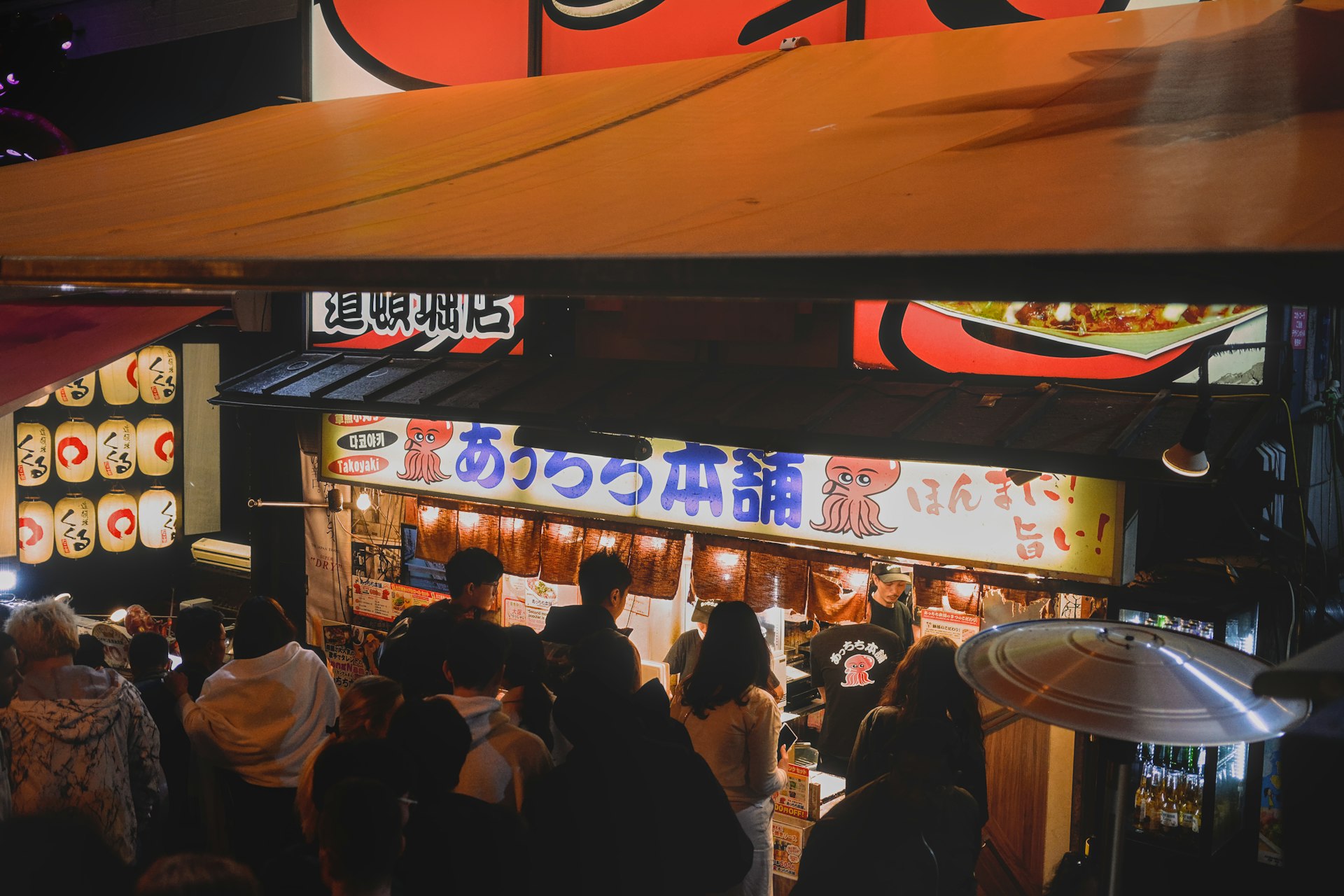
It’s drizzling on Dotonbori, and somewhere behind a fogged-up plastic curtain, a row of cast-iron takoyaki molds is pinging like a snare drum — tink, tink, tink — as a cook flips eight balls of octopus batter with two metal picks. The smell is dashi, hot oil, and bonito flakes lifting in the steam. This is Osaka’s promise: the country’s best food city does not require a reservation, a suit, or a tasting menu. Most nights, dinner costs less than a movie ticket.
Why Osaka Is Japan’s Best Food City
Tokyo has more stars. Kyoto has more elegance. Osaka has kuidaore — literally “eat yourself bankrupt,” a centuries-old local motto that treats food as the city’s primary art form. The streets reflect it. Every Osakan you ask has an opinion about which takoyaki stand is best, which okonomiyaki place still uses real yamaimo (mountain yam), and which kushikatsu joint refills the dipping sauce too often.
The practical upside for travelers: street food and counter spots dominate, which keeps prices low. A takoyaki order is roughly 600–700 yen . A loaded okonomiyaki runs 900–1,100 yen . Six or seven kushikatsu skewers come in under 1,000 yen . With careful ordering, every meal here lands under 8 USD.
💱 1USD ≈ 158JPY
Dotonbori: Takoyaki, Okonomiyaki, and the Crab Sign
Dotonbori is the neon canal strip every Osaka photo eventually finds. Yes, it is touristy. Yes, the giant mechanical crab is still moving. And yes, the food is still excellent if you know which doors to walk through.
For takoyaki, we like Wanaka Sennichimae and Kukuru — both have decades of practice and queues that move quickly. Order the plain version first so you can taste the batter; the egg-rich, almost-custardy interior is the whole point. Eat carefully — the molten core has burned more travelers than any other food in Japan.

For okonomiyaki, walk one block off the main strip to escape the photo-op restaurants. Mizuno on Dotonbori Street is the famous one and worth the wait once; if the line is too long, Chibo has consistent batter and the modan-yaki (with yakisoba noodles inside) is filling enough to count as two meals.
A tip locals will quietly confirm: pre-cooked okonomiyaki served on your hot iron teppan is fine, but the better tables let you flip it yourself or watch the cook do it tableside. Avoid the places where it arrives plated. The teppan is half the experience.
Kuromon Market: Lunch in the Aisles
Kuromon Ichiba — “the kitchen of Osaka” — is 600 meters of covered market about 10 minutes’ walk south of Dotonbori. It has changed in the last decade. There are more grilled-seafood stalls catering to tourists and fewer of the wholesale fish vendors that used to define the place. Locals still shop here, but earlier.
Go before 10 a.m. The aisles are wider, the prices are firmer, and you can actually talk to vendors instead of inching past them. Three things to order:
- Grilled scallop with butter and soy, eaten standing — about 500 yen
- Tuna sashimi cup from one of the fishmongers with a knife counter — 800–1,000 yen
- Tamagoyaki (Japanese rolled omelet) from a specialist stall — a single thick slice runs 200–300 yen

Combine those three and you’ve had a sit-down-quality lunch for under 8 USD, eaten while walking. Skip the giant wagyu skewers stacked in glass cases — they’re priced for Instagram, not for taste.
Shinsekai: Kushikatsu and the No-Double-Dipping Rule
South of the market, Shinsekai is the slightly scruffier neighborhood under the Tsutenkaku tower. It’s the spiritual home of kushikatsu — deep-fried skewers of meat, vegetables, cheese, and the occasional banana, each one breaded in panko and served with a communal vat of thin Worcestershire-style dipping sauce.
The rule, written on every wall in big friendly letters: no double-dipping. The sauce is shared. Dip once, eat the whole skewer, then use the free shredded cabbage to scoop sauce if you want more. Violating this in front of an Osaka grandmother is the closest you’ll come to a public scolding in Japan.

Daruma is the famous chain — the original is in Shinsekai and worth the visit for the angry-chef logo alone. Order the omakase set of 8–10 skewers for around 1,200 yen per two-piece plate. A solid 10-plate dinner with miso soup lands around 1,500 yen , well under our 8 USD ceiling if the yen is in a friendly mood. The salmon, mackerel, and tuna at this price point are genuinely good. Don’t expect the uni to be transcendent — it isn’t supposed to be.
Standing bars (tachinomi): scattered around Tenma and Namba, these are tiny counter-only spaces where you stand, drink one beer or highball, eat two cheap small plates, and leave inside 30 minutes. The point is rhythm, not lingering. A round of edamame, a grilled fish, and a draft beer comes to 1,000–1,200 yen . Bar-hop three of them and you’ve had a real Osaka evening.

A note on ramen: Osaka isn’t a ramen-pilgrimage city the way Fukuoka or Sapporo are, but solid tonkotsu and shoyu bowls run 800–1,000 yen at neighborhood shops near any major station. If you’ve already had ramen elsewhere in Japan, prioritize the local specialties first.
The Phrasebook
You can absolutely eat your way through Osaka with pointing and smiling, but five phrases unlock noticeably better service and occasionally a free extra skewer. Practice them on the train in.
- Sumimasen — Excuse me / sorry (the universal opener)
- Osusume wa nan desu ka? — What do you recommend?
- Kore wa nan desu ka? — What is this? (essential at Kuromon)
- Oishii desu! — It’s delicious!
- Okaikei onegaishimasu — Check, please
- Gochisousama deshita — Thank you for the meal (say it as you leave)
For reading hand-written menus on chalkboards and the occasional cash-only sign, a translation app with good camera-OCR earns its keep.
FAQs
Where do locals actually eat in Osaka?
Less in Dotonbori, more in Tenma, Fukushima, and around Tsuruhashi (the Korean-Japanese neighborhood famous for yakiniku). The under-the-tracks strip near JR Tenma Station is dense with tachinomi bars and skewer counters that almost never see a tour group.
Is Kuromon Market touristy now?
Yes, noticeably more than five years ago. It’s still worth visiting, but go before 10 a.m. for fairer prices and better access to the actual fish counters. After noon, the grilled-wagyu-on-a-stick stalls dominate and prices climb.
What’s the difference between Osaka and Hiroshima okonomiyaki?
Osaka-style mixes all the ingredients — cabbage, batter, pork, egg — into one pancake and grills it as a single mass. Hiroshima-style layers them: a thin crepe, then a mountain of cabbage, then pork, then noodles, then egg, assembled into a stack. Osaka is fluffier; Hiroshima is taller and more architectural.
Are vegetarian options available?
Increasingly yes, but be careful — most dashi (the base stock for okonomiyaki batter, ramen broth, and dipping sauces) contains bonito flakes. Ask “katsuobushi nashi de onegaishimasu” (without bonito, please). Kushikatsu has plenty of vegetable skewers, and conveyor sushi has good avocado, cucumber, and tamago plates.
Can you eat Osaka cheaply with kids?
Easily. Conveyor sushi is essentially designed for it — kids pick plates off the belt themselves. Takoyaki is portable. Okonomiyaki tables with a built-in iron griddle are an activity as much as a meal. Skip the standing bars after dark.
Sources
- Osaka Convention & Tourism Bureau — official guide
- Kuromon Ichiba Market — official site
- JNTO — Osaka food and drink
- Wikivoyage — Osaka
- Wikipedia — Okonomiyaki
- Wikipedia — Kushikatsu
Hero photo: see public/images/blog/osaka-street-food-guide-hero.json. Inline photos: see docs/image-licenses/osaka-street-food-guide.md.
Heads up! Some links on this page are affiliate links. We may earn a small commission at no extra cost to you. This helps us keep Traveloonie running and free for everyone.
Reviewed by Traveloonie Team, last updated 2026-05-28.