---
title: "A Week in the Swiss Alps: Lauterbrunnen, Zermatt, Lucerne"
description: "Seven Alps days from Lauterbrunnen's waterfalls to the Matterhorn at Zermatt to Lucerne's lake — when the Half Fare Card beats the Swiss Travel Pass."
pubDate: 2026-05-31T00:00:00.000Z
category: destination
author: "Traveloonie Team"
readTime: "10 min"
tags: ["swiss-alps","switzerland","europe","hiking"]
canonical: https://traveloonie.com/blog/swiss-alps-summer-week
---
import AffiliateCard from '../../components/AffiliateCard.astro';
import AffiliateDisclosure from '../../components/AffiliateDisclosure.astro';
import CurrencyWidget from '../../components/CurrencyWidget.astro';
The first sound in Mürren is cowbells. They start somewhere below the cliff, drift up through the pines, and arrive on the terrace before the coffee does. Lauterbrunnen Valley is a thousand metres below, ribbons of waterfall already catching morning light. Seven days in the Swiss Alps is a tight window, but it's enough to anchor in three very different places — a valley village, a car-free mountain town under the Matterhorn, and a lakeside city — and feel each one properly.
## Day 1-3: Lauterbrunnen Base (Mürren, Schilthorn, Trümmelbach)
Lauterbrunnen Valley is the headline image of Switzerland — a flat green floor walled by vertical cliffs, with seventy-two waterfalls. The valley village itself is convenient but busy; we prefer basing up the cliff in **Mürren** (car-free, 1,650 m, reached by cable car and mountain railway from Stechelberg or Lauterbrunnen). Wengen, on the opposite shoulder, is the other strong option and faces the Jungfrau more directly.
Day 1 is arrival and acclimation: walk the valley floor to **Trümmelbach Falls**, ten glacial cataracts roaring through the inside of a mountain. Day 2 goes up: the cable car to **Schilthorn** (2,970 m) for the Piz Gloria revolving restaurant and a 360° panorama that includes Eiger, Mönch, and Jungfrau in a single sweep. Day 3 is a hiking day — the **North Face Trail** from Mürren back down toward Gimmelwald is gentle, well-signed, and serves Eiger views the whole way.
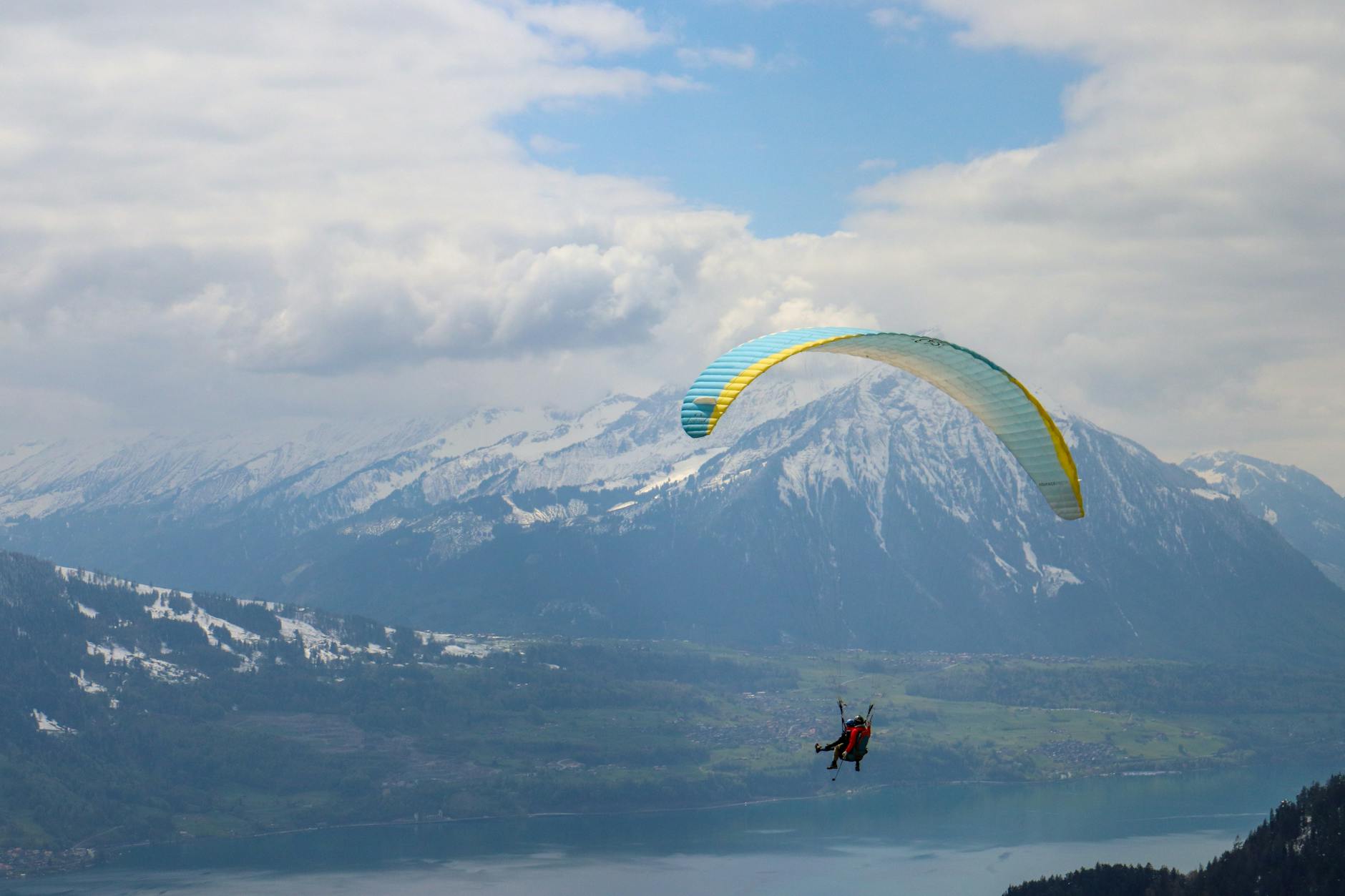
If the weather collapses (it does, even in July), pivot to Interlaken for the day — paragliding launches off Beatenberg, and the **Harder Kulm** funicular runs in light rain.
## Day 4-5: Zermatt + Matterhorn (Gornergrat Sunrise)
Travel day. From Lauterbrunnen, the route is Lauterbrunnen → Interlaken Ost → Spiez → Visp → Zermatt, about two and a half hours on the SBB network, no transfers longer than ten minutes. Zermatt is car-free; you park in Täsch and ride the shuttle train up.
Zermatt earns its reputation. The **Matterhorn** appears the moment you step out of the station and dominates every window in town. Day 4 we spend low: walking the Kirchbrücke at golden hour for the postcard reflection, eating rösti at Whymperstube, and stretching legs on the easy lakes loop to **Leisee** via Sunnegga.
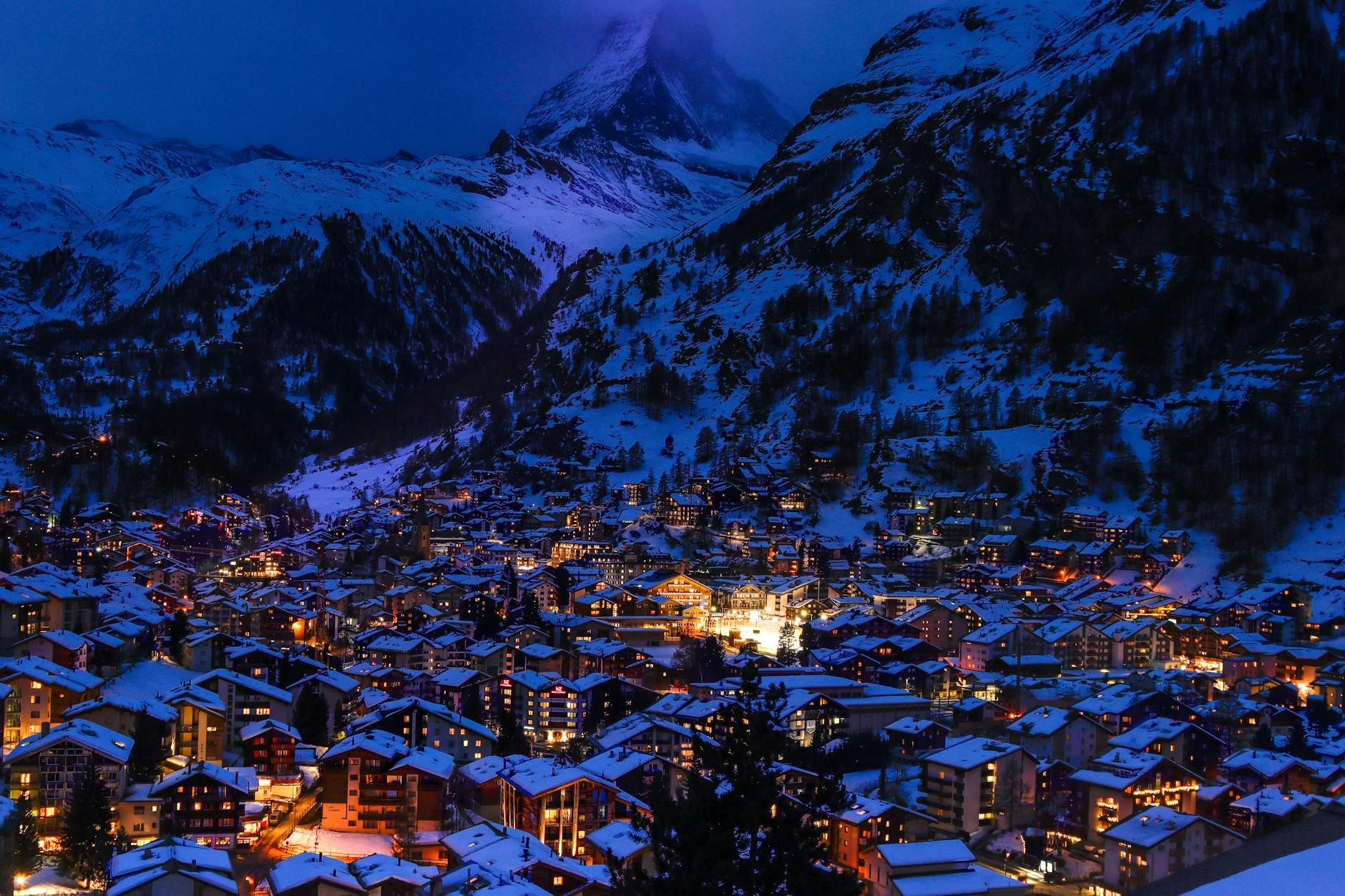
Day 5 is the early alarm. The **Gornergratbahn** runs the first train around 07:00 in summer; ride it to 3,089 m for sunrise on the Matterhorn's east face, with the Gorner Glacier curving below. Bring layers — it can be near freezing at the top even when the valley is at 25°C. Hike back partway via Rotenboden to Riffelsee for the famous mirror-pond reflection shot, then drop the rest by train.
## Day 6-7: Lucerne (Lake, Mt. Pilatus, Old Town)
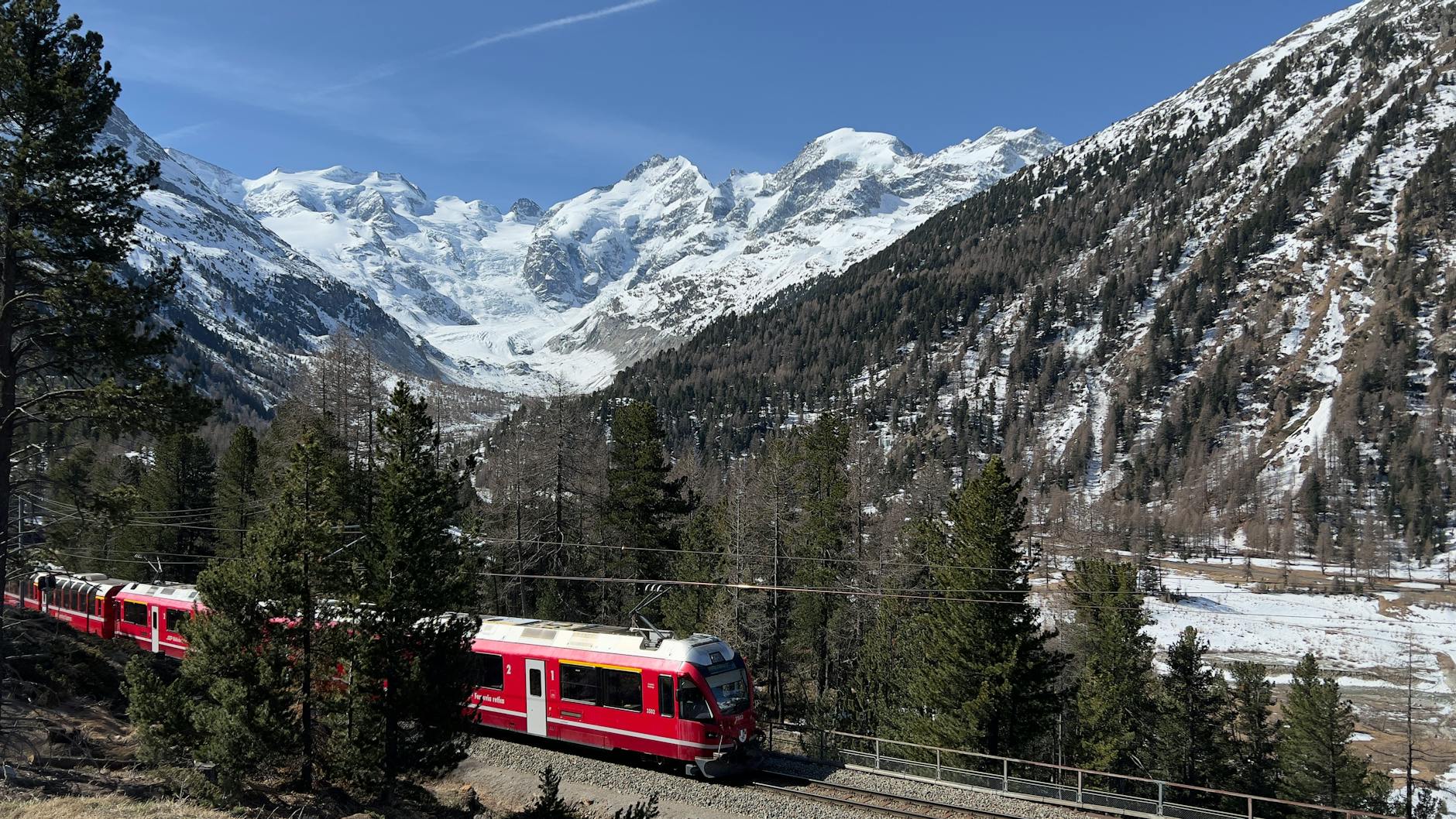
The transfer from Zermatt to Lucerne is one of the best train rides on earth — a slower version follows the **Glacier Express** corridor through Andermatt; the direct SBB routing via Visp and Bern takes about three and a half hours and is half the price.
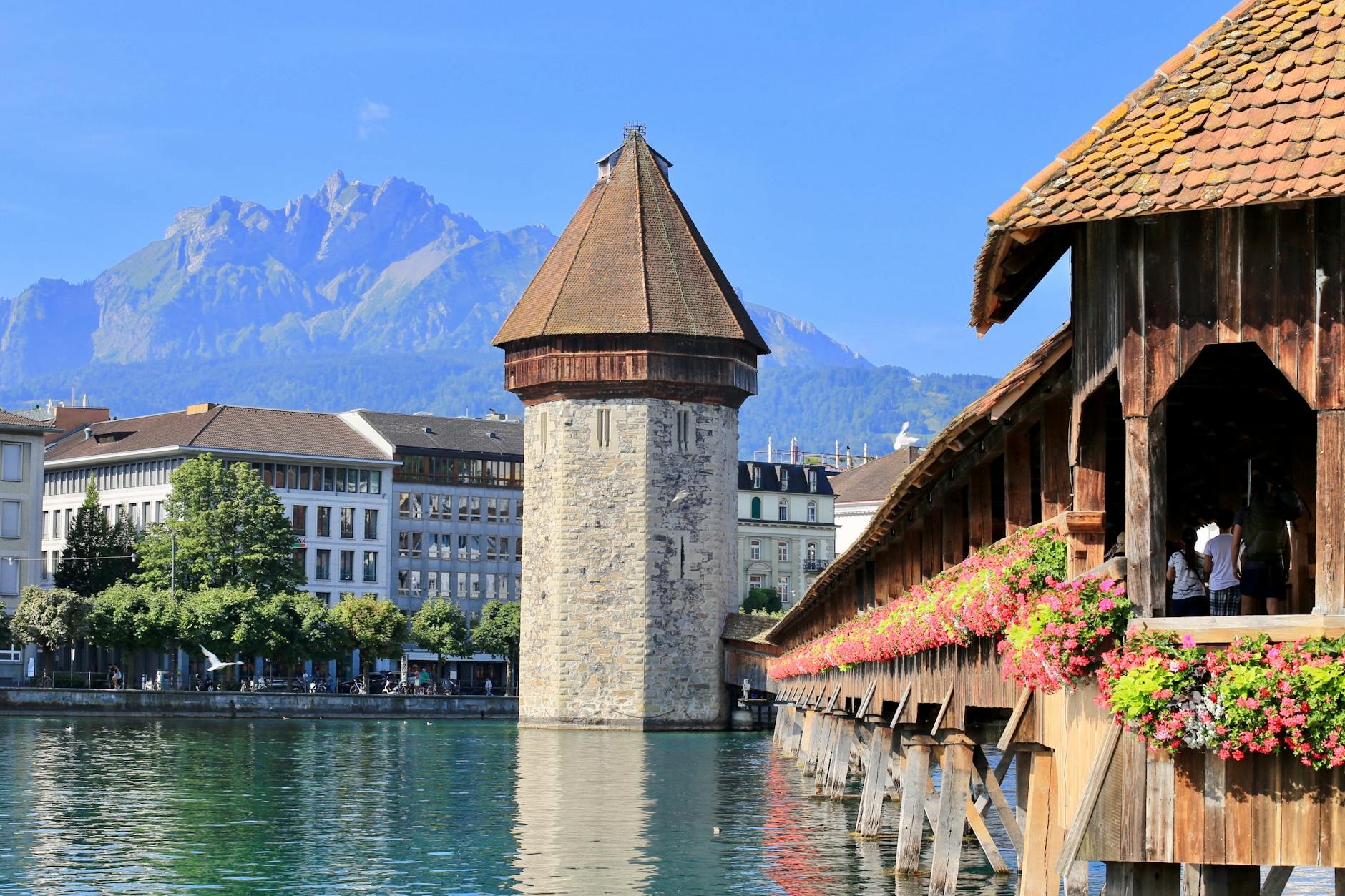
Lucerne lowers the altitude and the intensity. Day 6 is the **Chapel Bridge** (Kapellbrücke), the painted wooden footbridge over the Reuss, plus a slow afternoon around the Old Town — Weinmarkt, the Lion Monument, the Bourbaki Panorama. A lake cruise on the **Vierwaldstättersee** at sunset is the right way to end the day.
Day 7 we go back up — **Mt. Pilatus** by the "Golden Round Trip": boat to Alpnachstad, the world's steepest cogwheel railway up, gondola and cable car down via Kriens. Eight hours, no rental car needed, finishes you back at Lucerne station in time for the evening train to Zürich Airport.
## Getting There
Zürich (ZRH) is the main gateway and connects to the SBB rail network directly under the terminal — no transfer needed, trains to Lucerne run every thirty minutes and reach Interlaken in about two hours. Geneva (GVA) works if you're starting in the west, but adds roughly ninety minutes of travel before you reach the Alps.
## The Half Fare Card vs Swiss Travel Pass (Math)
This is the single decision that defines a Swiss trip's budget, and most one-week visitors get it wrong.
- **Swiss Travel Pass (8 days, 2nd class):** roughly 459 CHF . Unlimited SBB trains, boats, most city transit, plus most mountain railways at 50% off and a few (Rigi, Stanserhorn) included outright. Museums included.
- **Half Fare Card (1 month):** roughly 120 CHF . Cuts 50% off virtually everything — SBB, boats, and most mountain railways — but you still buy individual tickets.
The crossover point sits around 700-800 CHF of full-fare travel. Our seven-day itinerary above — Zürich → Lauterbrunnen → Schilthorn → Zermatt → Gornergrat → Lucerne → Pilatus → Zürich — adds up to roughly 750-900 CHF at full fare, which means the **Swiss Travel Pass usually wins for this exact trip**. If you cut one mountain excursion or stay longer in one base, the **Half Fare Card** pulls ahead. Run your own numbers on the SBB price calculator before you commit.
## When to Go: June-September Window
Alpine summer is short. **Late June through mid-September** is the only stretch when every high-altitude lift, hut, and pass is reliably open. July and August are peak — busier trails, full hotels, premium prices — but also the most stable weather. June still has snowfields on the high traverses; September has crisp visibility and thinning crowds but a real risk of early snow above 2,500 m. Outside this window, expect closures: many cable cars and mountain restaurants shut entirely from mid-October to late May.
Weather changes hourly above 2,000 m. Build at least one buffer day per base so you can swap a clouded-out Schilthorn morning for a clear Jungfraujoch the next day.
## Money & Logistics
Switzerland uses the **Swiss Franc**, not the euro. Cards are accepted virtually everywhere including mountain huts; cash is useful only for very small village bakeries.
Yes, it is expensive. Mid-range hotels run 200-350 CHF per night in summer, a sit-down dinner is 30-50 CHF per person, and a single mountain return ticket can pass 100 CHF without the Half Fare Card. Coop and Migros supermarkets are the budget lever — picnic lunches at viewpoint benches save 30-40 CHF per day per person and are completely normal local behaviour.
Tap water is excellent everywhere, including from village fountains marked "Trinkwasser." Tipping is not expected; rounding up is plenty.
## FAQs
### Is the Swiss Travel Pass worth it for one week?
For an itinerary like this one — three bases, two big mountain excursions, multiple long train legs — yes, it usually edges out. For a slower trip that stays in one valley and skips the big lifts, the Half Fare Card almost always wins. Build your real ticket list on sbb.ch first, then decide.
### Best base: Lauterbrunnen, Wengen, or Mürren?
Lauterbrunnen for convenience (trains run latest, restaurants and supermarkets in walking distance). Wengen for the Jungfrau view and a calmer village feel. Mürren for the highest perch, car-free silence, and the easiest access to the Schilthorn. We've stayed in all three; Mürren wins on atmosphere, Lauterbrunnen on logistics.
### Do I need a car?
No, and we'd argue against it. Swiss trains are punctual to the minute, run everywhere, and many of the best mountain towns (Zermatt, Mürren, Wengen) are car-free anyway. Parking in resort villages is also painfully expensive.
### Is Switzerland really as expensive as people say?
Yes. The shock is real, particularly at restaurants and on mountain cable cars. The fix is to mix it: supermarket breakfasts and lunches, one nice dinner per base, and the right rail pass for your specific route. A frugal-but-not-painful week runs about 1,800-2,200 CHF per person excluding flights; a comfortable mid-range week is 2,500-3,200 CHF.
### How many days do I need for Switzerland?
Seven is the floor for the classic three-base loop above. Ten lets you add Bern or the Glacier Express slow route between Zermatt and St. Moritz. Less than five and you're better off picking one valley and going deep.
## Sources
- [Switzerland Tourism — myswitzerland.com](https://www.myswitzerland.com/)
- [SBB / Swiss Federal Railways — sbb.ch](https://www.sbb.ch/)
- [Jungfrau Railways — jungfrau.ch](https://www.jungfrau.ch/)
- [Schilthorn / Piz Gloria — schilthorn.ch](https://schilthorn.ch/)
- [Gornergrat Bahn — gornergratbahn.ch](https://www.gornergratbahn.ch/)
- [Pilatus — pilatus.ch](https://www.pilatus.ch/)
- [Wikivoyage — Switzerland](https://en.wikivoyage.org/wiki/Switzerland)
Hero photo: see public/images/blog/swiss-alps-summer-week-hero.json. Inline photos: see docs/image-licenses/swiss-alps-summer-week.md.
*Reviewed by Traveloonie Team, last updated 2026-05-31.*