On the third-to-last morning of our loop, a two-toed sloth was suspended in a cecropia tree above the main trail at Manuel Antonio, eyes half-closed, one arm stretched mid-yawn. No guide had pointed it out yet. A small crowd had already gathered, phones aloft, and the sloth — utterly indifferent — kept chewing. That is the Costa Rica payoff, distilled. Ten days, three regions, and animals that mostly do not care you are there.
The Three-Region Loop (Volcano → Cloud → Coast)
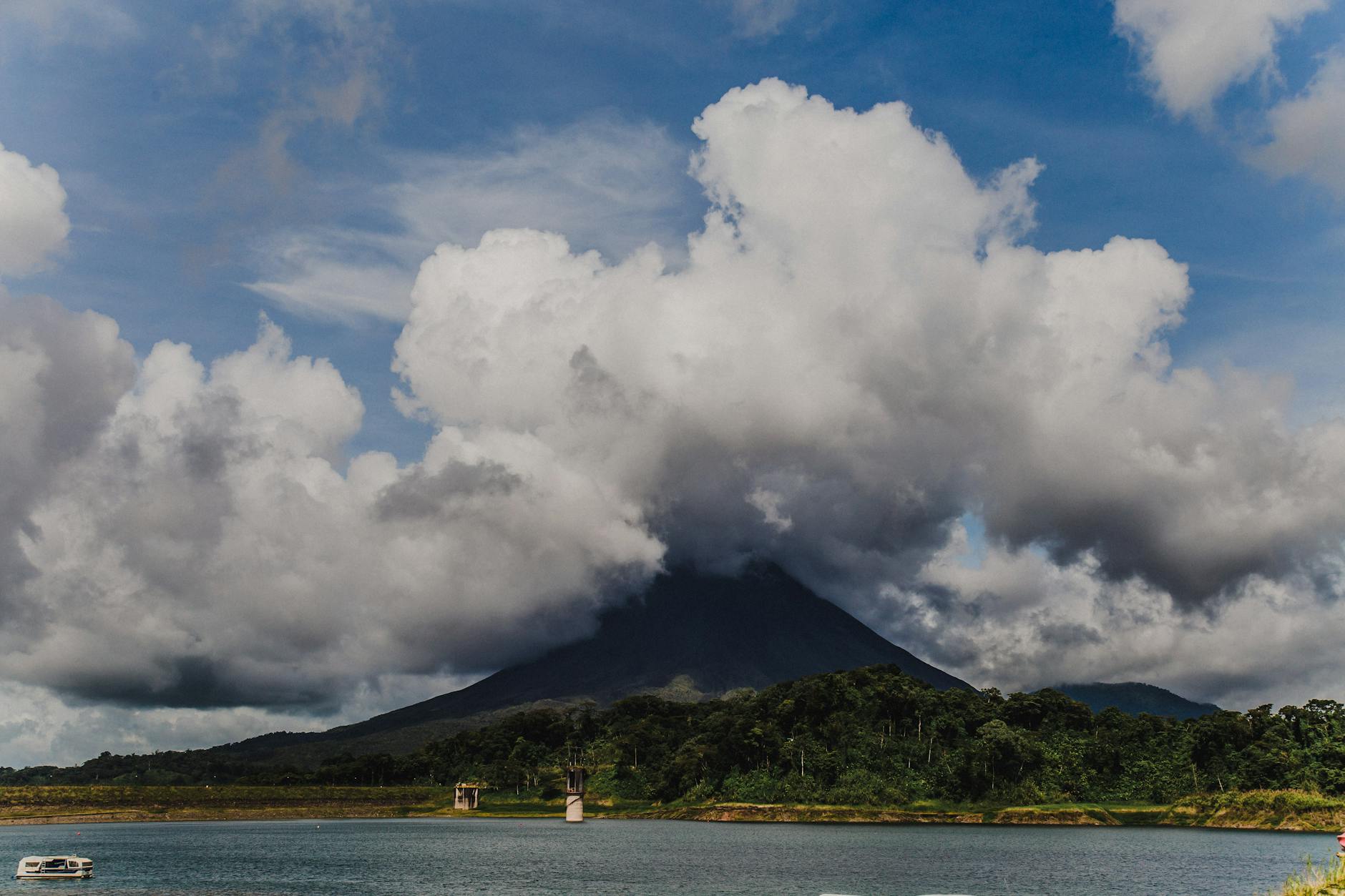
The classic ten-day Costa Rica route stitches together three radically different ecosystems: La Fortuna (Arenal volcano + rainforest), Monteverde (cloud forest at altitude), and Manuel Antonio (Pacific coast + secondary rainforest). The driving distances look short on a map — 90 to 140 km between bases — but Costa Rican mountain roads are slow, and the Monteverde stretch in particular includes long unpaved sections that punish low-clearance sedans.
We recommend flying into San José (SJO), driving or shuttling counter-clockwise (Arenal first, Monteverde second, Manuel Antonio third), and flying out of SJO or Quepos (XQP). This direction puts the gnarliest road behind you early and ends with beach days, which is the right emotional arc.
If you only have a week, drop Monteverde. If you only have five days, pick one region and go deep — Costa Rica rewards slowness more than checklists.

Day 1-3: Arenal (La Fortuna Waterfall, Hot Springs, Hike)
Land in San José, pick up the rental, and drive three hours north to La Fortuna. Arrive before dark — the road climbs and twists, and Costa Rican rural roads have minimal lighting plus the occasional dog, horse, or pothole the size of a coffee table.
Day 2 is the La Fortuna Waterfall (a steep 500-step descent into a swimmable basin) plus an afternoon at one of the geothermal hot-spring complexes. Tabacón and Baldi are the big resorts; the free public option, locally called “Río Chollín,” is a hot river under a bridge ten minutes outside town — bring water shoes and go before sunset.
Day 3 is a guided Arenal hike. The 1968 lava-flow trail in Arenal Volcano National Park is the marquee option; Cerro Chato (the dormant cone next door) is steeper, muddier, and worth it for the crater lake. Howler monkeys are nearly guaranteed at dawn. Pack layers — La Fortuna town is humid and warm, but the volcano flanks can be 10 °C cooler.
Day 4-6: Monteverde (Hanging Bridges, Night Walk)
The Arenal-to-Monteverde transfer is the trip’s logistical inflection point. Three options:
- Drive yourself (3-4 hours, mostly unpaved past Tilarán — 4x4 strongly recommended).
- Jeep-Boat-Jeep shuttle (about 3 hours, crosses Lake Arenal, scenic, around USD 30-40 per person).
- Private shuttle (4 hours by road, around USD 150-200 for the vehicle).
We took the Jeep-Boat-Jeep on the way in and drove out — that combination minimizes the dirt-road exposure and lets you keep luggage with you.
In Monteverde, the must-dos are the Selvatura or Sky Adventures hanging-bridges circuit (canopy-level views without a guide required), a guided night walk at Curi-Cancha or Santa Elena reserves (sleeping birds, kinkajous, tarantulas, sometimes a sloth at eye level), and — if weather cooperates — the early-morning entry at Monteverde Cloud Forest Reserve itself. Quetzals nest from February through July; outside that window your odds drop sharply.

Monteverde is also the cleanest place in Costa Rica to do a serious zipline. Selvatura and 100% Aventura both run multi-cable circuits with a Tarzan swing finale. Book the morning slot — afternoons fog in hard.
Day 7-10: Manuel Antonio (Park + Beach)
From Monteverde, descend to the Pacific coast (4-5 hours via Jacó, or 5-6 hours the slower scenic route). Manuel Antonio is touristy and unapologetic about it — beach bars, monkey-proof trash cans, and the smallest national park in Costa Rica’s system packing the highest wildlife density per hectare.
Enter the park at 7 AM when the gates open. The main trail is paved and flat — accessible enough for most visitors — and within two hours you can reasonably expect to see white-faced capuchins, howler monkeys, squirrel monkeys (Costa Rica’s endangered titi), agoutis, coatis, iguanas, and at least one sloth. A guide is optional but materially increases sloth-spotting odds because they carry spotting scopes and know which trees the resident animals favor.

Playa Manuel Antonio (inside the park) and Playa Espadilla Sur are postcard beaches with calm water at low tide. Outside the park, Playa Biesanz is a quieter cove favored by locals; book a taxi or hike the cliff trail down. Avoid feeding monkeys — it is illegal, it makes them aggressive toward humans, and rangers do issue fines.
If you have a flex day, consider an add-on to Tortuguero on the Caribbean side for green sea turtle nesting (July-October peak) — it is a separate flight or long combined bus-boat journey, so only worth it if turtles are a priority.

Rental Car or Shuttles?
Honest answer: it depends on the season and your comfort with rough roads.
Rent a 4x4 if: you are visiting in dry season (December-April), you want flexibility on side trips (Río Celeste, Bajos del Toro, Nauyaca Waterfalls), and you are comfortable with steep gravel switchbacks. Budget USD 60-90/day for a small SUV with mandatory insurance — the daily insurance often equals the daily rental, do not be surprised.
Use shuttles if: you are visiting in green season (May-November) when roads wash out, you would rather not stress about parking and theft (smash-and-grabs at trailheads are common), or you only have three stops on the itinerary. Interbus and Caribe Shuttle both run reliable point-to-point service for USD 50-65 per person per leg.
We did a hybrid — Jeep-Boat-Jeep into Monteverde, then picked up a 4x4 for the rest. That gave us the worst road handled by professionals and freedom on the Pacific coast.
Money & Wildlife Etiquette
Costa Rica uses the colón (CRC), but US dollars are accepted almost everywhere — hotels, tours, supermarkets, even park entrance fees. ATM withdrawals come out in CRC and give better rates than airport exchange.
Budget roughly USD 100-180/person/day mid-range — that covers a clean hotel with breakfast, two meals out, park entrance (USD 18-26 per park), and one activity. Backpackers can do it on USD 50-70 with hostels and sodas (local diners serving casado plates for USD 5-8). Tour-heavy travelers will push USD 250+.
Wildlife etiquette is non-negotiable in Costa Rica and signposted everywhere: do not feed, do not touch, do not chase for a selfie, do not use flash photography on nocturnal animals. Sloths in particular are stress-sensitive and being passed around for tourist photos has been linked to early mortality at rescue centers. Observe from the trail, use zoom, move on.
Pre-Trip: Insurance and Buffers
Costa Rica is generally safe and well-served by clinics, but adventure activities (ziplines, whitewater rafting on the Pacuare, surfing) plus the occasional snake or scorpion encounter make travel medical insurance worth the small spend. Confirm your policy covers adventure sports explicitly — many basic plans exclude ziplining.
Also build buffer days into your itinerary. Green-season rain can cancel zipline tours and close roads with mudslides. A flexible afternoon is worth more than a tightly-booked one.
FAQs
Do I need a 4x4 in Costa Rica?
For Arenal + Manuel Antonio only, no — a regular sedan handles those roads fine. For Monteverde, yes, especially in green season — the last 20 km is unpaved gravel with steep grades and potholes. Many rental contracts technically void insurance if you take a 2WD on unpaved roads, so even if a sedan can physically make it, you may be uninsured.
Is the green season (rainy season) worth it?
Yes, with caveats. May-June and November are the sweet spots — fewer crowds, lower prices, and rain usually arrives in predictable afternoon bursts. September-October is the wettest stretch on the Pacific side and we would skip Manuel Antonio then. The Caribbean coast (Tortuguero, Puerto Viejo) has an inverted pattern — driest in September-October.
Are the night walks worth the price?
Yes, especially in Monteverde and the Osa Peninsula. A two-hour guided night walk runs USD 25-40 per person and reliably surfaces animals you will never see in daylight — kinkajous, olingos, sleeping birds, snakes, tarantulas, and frogs. Go with a small group (max 8) and a guide with a red-filter flashlight.
Can I see a sloth without a guide?
Possibly, but a guide roughly triples your odds. Sloths blend into the canopy as moss-colored lumps and only move every few hours. Park guides at Manuel Antonio carry telescopes pre-aimed at known sloths, so even DIY visitors usually get a look by hovering near a tour group near the entrance. Tipping the guide a few dollars if you use their scope is standard etiquette.
Is tap water safe to drink?
In most of the country, yes — Costa Rica has one of the better municipal water systems in Central America. Exceptions: remote Caribbean coast and some rural areas where bottled or filtered is safer. If your stomach is sensitive, default to bottled for the first few days.
Sources
- Visit Costa Rica — Official Tourism Board
- SINAC — National System of Conservation Areas (parks, entry, hours)
- Costa Rica Tourism Board — Travel Requirements
- Wikivoyage — Costa Rica
- Manuel Antonio National Park — SINAC page
- Arenal Volcano National Park — SINAC page
- Monteverde Cloud Forest Reserve
Hero photo: see public/images/blog/costa-rica-10-days-hero.json. Inline photos: see docs/image-licenses/costa-rica-10-days.md.
Heads up! Some links on this page are affiliate links. We may earn a small commission at no extra cost to you. This helps us keep Traveloonie running and free for everyone.
Reviewed by Traveloonie Team, last updated 2026-06-01.