Sunday morning on Avenida Amsterdam in Condesa is the moment Mexico City sells itself. The street is a long oval — an old horse-racing track turned tree-lined promenade — and by 9 a.m. it belongs to joggers, French bulldogs, and a slow drift of people carrying coffee from the corner cafés. This is the CDMX most first-time visitors fall for: leafy, calm, and walkable. The rest of the city is bigger, louder, and more interesting. Here is how to do all of it in four days.
Where to Base: Roma Norte vs Condesa vs Coyoacán
For a first trip, base yourself in Roma Norte or Condesa. They are adjacent, both walkable, both stocked with independent cafés, mezcal bars, and design hotels. Roma Norte skews a bit more nightlife-forward; Condesa is greener and quieter, anchored by Parque México and Parque España. Either neighborhood puts you a short Uber from Chapultepec, the historic center, and the airport.
Coyoacán, further south, is charming — cobblestones, Frida Kahlo’s house, weekend markets — but lodging there means a 30–45 minute ride to anywhere else. Better as a day-trip than a base. Polanco is the upscale, Beverly-Hills-meets-Mexico option if you want luxury hotels and Michelin-starred dining; it is safe and polished but lacks the daily-life texture of Roma/Condesa.

CDMX sits at 2,240 meters (7,350 feet). Altitude is real. Day one, go easy on mezcal and walk less than you think you should — the air is thinner than most visitors expect, and dehydration sneaks up fast.
Day 1: Centro Histórico (Zócalo, Templo Mayor, Diego Rivera Murals)
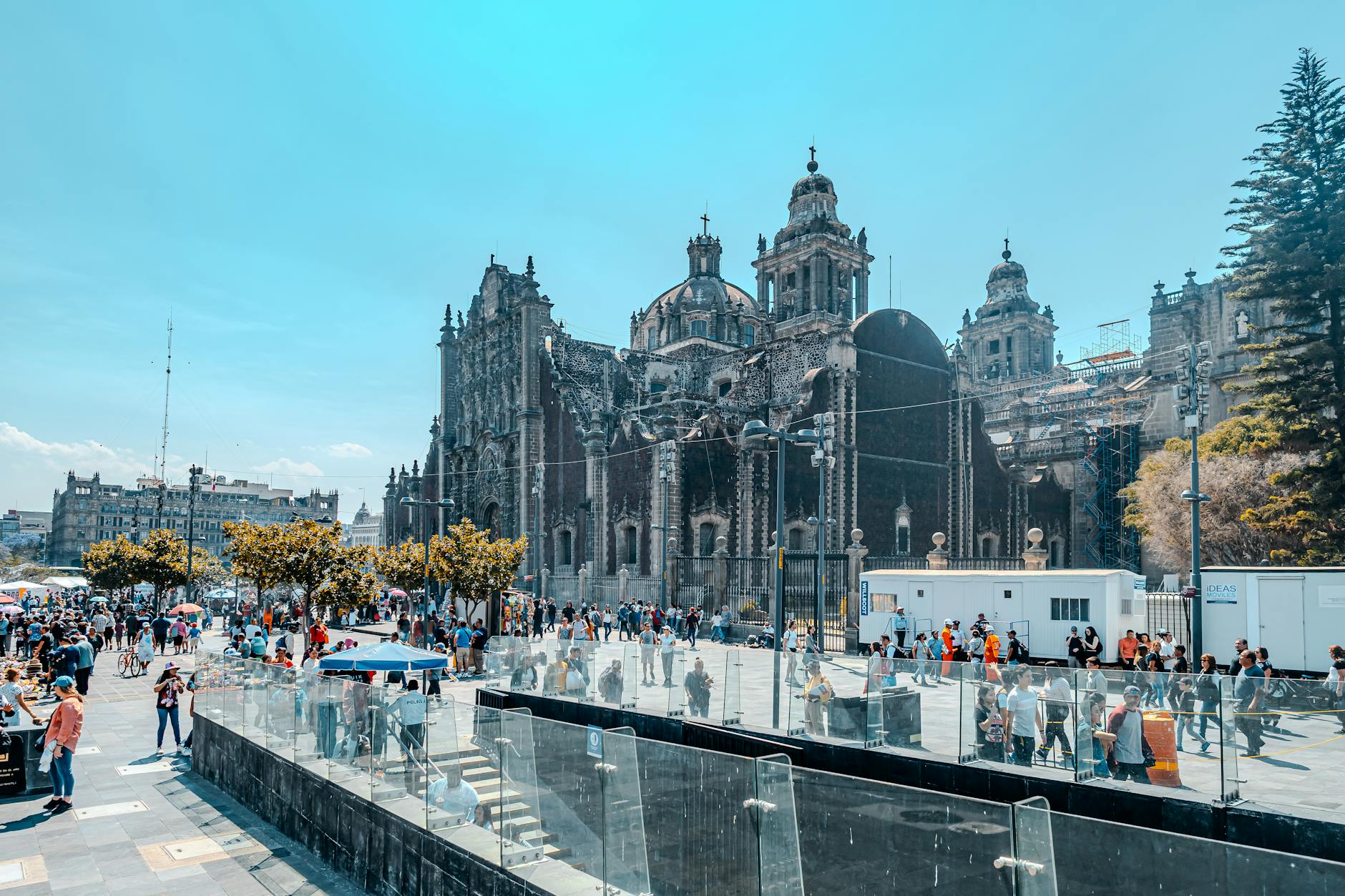
Start in the historic center. The Zócalo — formally Plaza de la Constitución — is one of the largest city squares in the world, ringed by the Metropolitan Cathedral, the National Palace, and the ruins of the Aztec Templo Mayor. The cathedral is free; Templo Mayor and its museum charge a small fee and are worth two hours. The Aztec city of Tenochtitlán once stood exactly here, and the site lets you stand on the foundation stones of the temple that defined the empire.
From the Zócalo, walk two blocks to the National Palace to see the Diego Rivera murals along the staircase and second floor — a sweeping painted history of Mexico from pre-Columbian times through the Revolution. Entry is free with a passport or ID; lines move quickly on weekday mornings.
Lunch in the historic center: El Cardenal for a classic Mexican breakfast-into-lunch (chiles en nogada in season), or Café de Tacuba for old-school ambience and a quieter pace. Walk off the meal at the Palacio de Bellas Artes — the art-nouveau-meets-art-deco opera house — and stop at Sears across the street for the rooftop café with the postcard view of Bellas Artes’ yellow dome.
Day 2: Teotihuacán Day-Trip (Pyramids of Sun and Moon)
Teotihuacán is 50 kilometers northeast of the city and the most consequential archaeological site within reach of CDMX. The Pyramid of the Sun is the third-largest pyramid in the world by volume; the Pyramid of the Moon anchors the northern end of the Avenue of the Dead. The site was built between roughly 100 BCE and 250 CE and was already in ruins when the Aztecs found it — they named it “the place where the gods were created.”

How to get there:
- Public bus from Terminal del Norte: cheap, ~1 hour, runs every 15–20 minutes. Buy the round-trip ticket; the return desk closes earlier than you think.
- Uber from Roma/Condesa: ~90 minutes one-way; arrange the return in advance or risk being stranded.
- Guided tour: easiest if you want context. Look for small-group archaeology-focused tours rather than the bus-and-buffet variety.
Go early. Gates open at 9 a.m., and the site is exposed — no shade, high-altitude sun. Bring water, a hat, sunscreen, and shoes you can climb in. As of 2026, climbing the pyramids themselves is restricted; check the INAH (Instituto Nacional de Antropología e Historia) site for current access rules.
Back in CDMX by late afternoon — early dinner in Roma, then sleep. Tomorrow is the food day.
Day 3: Chapultepec Park + Roma Food Crawl
Chapultepec is CDMX’s Central Park, only bigger and older. The Museo Nacional de Antropología sits inside the park and is, without exaggeration, one of the world’s great museums. Three hours minimum. The Aztec hall with the Sun Stone is the headline, but the Maya and Oaxaca halls reward unhurried attention. Closed Mondays.

If museums aren’t your speed, Chapultepec Castle — the hilltop former imperial residence — has the best view of Paseo de la Reforma and a manageable history museum inside.
Afternoon: nap. Evening: food.
A loose Roma food crawl, in walking order:
- Tacos al pastor at El Tizoncito or El Huequito — pork shaved from a vertical spit, pineapple on top, on small corn tortillas.
- Mezcal flight at La Clandestina or Bósforo — small pours, served neat with orange slices and sal de gusano.
- Pan dulce late-night from Panadería Rosetta on Colima.

Mexico City was a UNESCO Creative City of Gastronomy designee, and the food scene runs from street tacos to Pujol-tier tasting menus. For the latter, book six to eight weeks ahead.
Day 4: Xochimilco or Coyoacán (Frida Kahlo Museum)
Choose one.
Coyoacán is the lower-energy choice. The Frida Kahlo Museum (Casa Azul) is the painter’s actual cobalt-blue childhood home, where she lived with Diego Rivera and later died. Book tickets online days in advance — same-day entry is rare. After, walk to the Coyoacán market for lunch (tostadas at the central counter), then wander the cobbled streets and the Jardín Centenario.
Xochimilco is the louder, weirder, more festive option. The remains of the Aztec canal system, now navigated on brightly painted flat-bottomed boats called trajineras. Bring a group, bring snacks, hire one boat together — going solo on a trajinera is melancholy. Saturdays and Sundays are when the floating mariachis and food vendors show up. Allow four hours minimum including transit.
The Real Safety Talk (Neighborhood-by-Neighborhood, Uber Rules, Tap Water)
This is the section every guide soft-pedals. We will not.
The US State Department travel advisory for Mexico as of 2026 places CDMX at a moderate advisory level — historically “Reconsider Travel” or “Exercise Increased Caution” depending on the year. The advisory is national; CDMX itself is considerably safer than the headline implies for tourists who stay in the right neighborhoods.
Where tourists actually go and the risk is low: Roma, Condesa, Polanco, Coyoacán, Chapultepec, Centro Histórico during daytime, San Ángel.
Where to be more alert: Centro Histórico after dark, Tepito (don’t), Iztapalapa, Doctores at night. The metro is generally safe by day but pickpocket-heavy at rush hour — keep phones away from doors.
Uber and DiDi rules:
- Use the apps. Skip street-hailed taxis (libres). This is the single most important rule.
- Verify the license plate matches the app before getting in.
- Share the trip with someone via the app’s share function.
- Sit in the back seat.
Tap water: don’t drink it. Use bottled or filtered for drinking and brushing teeth. Ice at established restaurants is almost always made from purified water — fine. Street stalls are a judgment call; the rule of thumb is “hot, fresh, and a long line.”
ATMs: use bank-branch ATMs during business hours, inside the lobby when possible. Avoid free-standing ATMs on the street.
Money, Costs, and Logistics
CDMX is one of the better-value major capitals in the world right now. Lunch at a sit-down restaurant in Roma runs 200–400 pesos per person; a beer at a casual bar, 60–90 pesos; an Uber across the city, 80–180 pesos.
Cards are widely accepted in Roma, Condesa, and Polanco. Carry small-denomination pesos for street food, tips, and Uber drivers who occasionally ask for cash for tolls.
FAQs
Is Mexico City safe in 2026?
For tourists who stay in Roma, Condesa, Polanco, Coyoacán, or Centro Histórico during daytime and use Uber/DiDi, the practical safety experience is similar to any large Latin American capital. Check the US State Department’s current advisory for CDMX before booking.
Can I drink the tap water?
No. Use bottled or filtered water for drinking and brushing teeth. Ice at established restaurants is generally fine; ice from unknown street stalls is a judgment call.
Uber vs taxi?
Uber and DiDi. Skip street-hailed taxis. The apps are cheaper, safer, GPS-tracked, and the drivers know the city. Confirm plate-matches-app before entering.
Best month to visit?
March through May for warm, dry, jacaranda-blooming weather. November and December are crisp and clear. The rainy season (June–September) brings dramatic afternoon thunderstorms — mornings are usually clear, so plan accordingly.
Do I need to speak Spanish?
English works in Roma, Condesa, Polanco, and most hotels. Outside those zones, even a few words of Spanish — “por favor,” “gracias,” “la cuenta” — go a long way and are appreciated.
Sources
- Visit Mexico City — Official Tourism Site
- US State Department — Mexico Travel Advisory
- INAH — Zona Arqueológica de Teotihuacán
- Museo Nacional de Antropología
- Museo Frida Kahlo (Casa Azul)
- Wikivoyage — Mexico City
- UNESCO Creative Cities — Gastronomy
Hero photo: see public/images/blog/mexico-city-long-weekend-hero.json. Inline photos: see docs/image-licenses/mexico-city-long-weekend.md.
Heads up! Some links on this page are affiliate links. We may earn a small commission at no extra cost to you. This helps us keep Traveloonie running and free for everyone.
Reviewed by Traveloonie Team, last updated 2026-06-01.