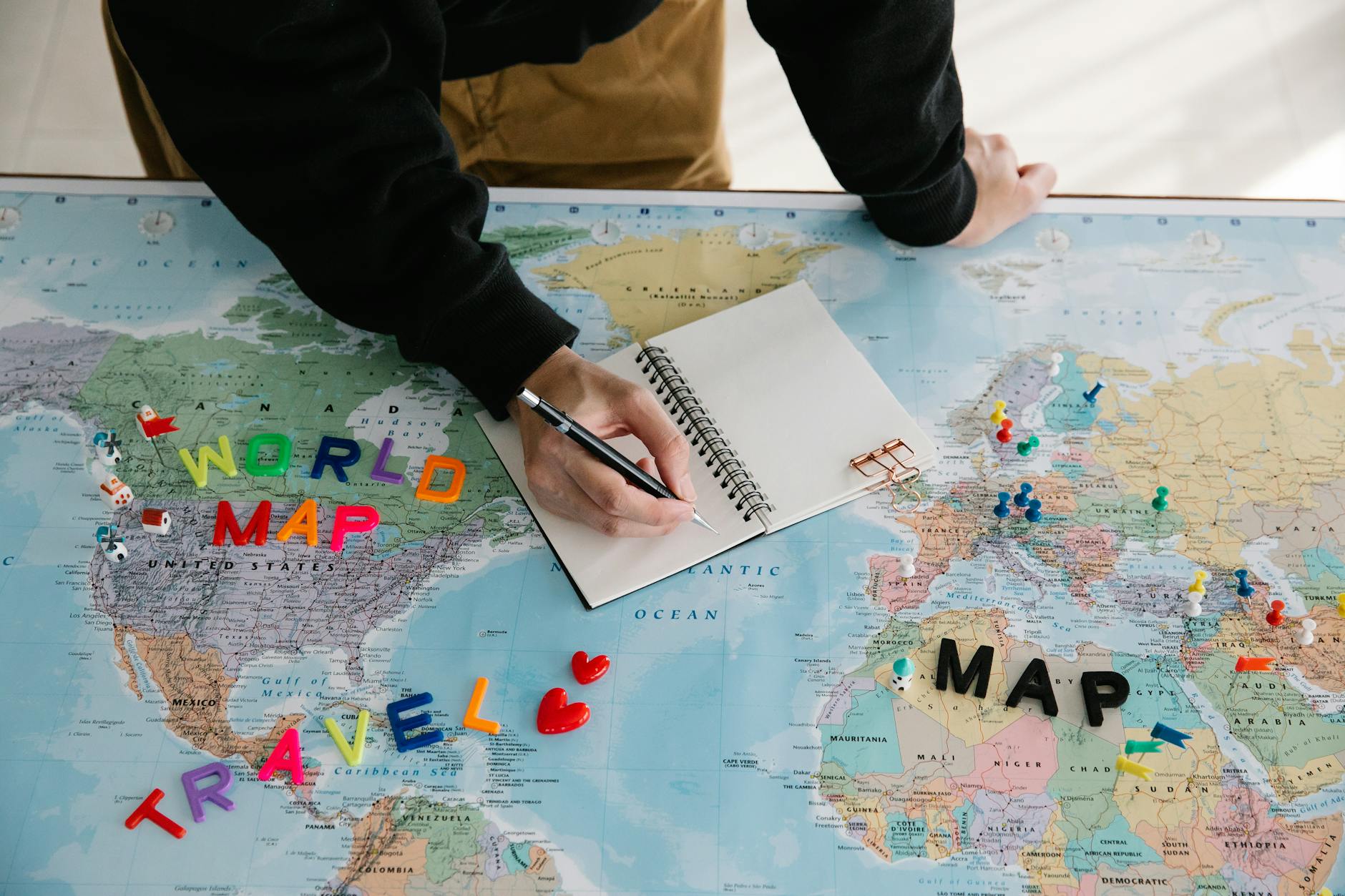
Most travel content on Instagram and TikTok starts with the photo and works backward to the city. We work the other way around. Before we pitch a single “best cafe” or shoot a single reel, we spend roughly a week reading, cross-referencing, and arguing about a destination — because a guide built on top-ten listicles ends up recommending the same six places everyone else already recommends. Here is the actual workflow we use, in the order we use it.
Layer 1: Official Tourism Boards (Skeptically)
We always start with the official tourism board for the country and city. Not because they’re honest — they’re paid to make the place look good — but because they’re a structured baseline. They tell us what festivals are happening, what the major transit projects look like, and which neighborhoods the government wants tourists to think of as safe. That last bit is useful both for the recommendation and for the inverse: if a tourism board never mentions a district, we want to know why.

We read the official site, then immediately discount anything that sounds like a press release. Phrases like “vibrant cultural hub” and “hidden gem” get a strikethrough in our notes. What we keep: opening hours for public museums, current visa rules, train and metro maps, and the dates of any seasonal closures. Tourism boards are reference material, not opinion sources.
Layer 2: Wikivoyage and Wikipedia (Crowd-Sourced, Honest)
Wikivoyage is the single most underrated travel resource on the internet, and we will die on this hill. It’s a sibling project to Wikipedia, edited by travelers, with a strict no-spam policy. The tone is dry — almost wiki-bureaucratic — and that’s exactly why we trust it. Nobody is getting paid to call a hostel “vibe-y” on Wikivoyage.
We read the full Wikivoyage page for the country, then the city, then the specific district if it exists. We pull out: how locals actually pronounce the place name, scams listed in the “Stay Safe” section, the genuine top sights ranked by editor consensus rather than SEO, and — critically — the “Get In” and “Get Around” sections, which are usually more accurate than any blog.
Wikipedia gets a parallel read for history, demographics, and politics. You can’t write honestly about a place without knowing what happened there in the last fifty years. Skipping this step is how influencers end up posting cheerful brunch reels from sites of recent atrocity.
Layer 3: Reddit r/Travel + Country-Specific Subs (Locals & Recent Visitors)
After the wiki layer, we switch from reference to opinion — and Reddit is where we go. The country-specific subreddits (r/japan, r/portugal, r/mexicocity, etc.) are mostly locals, which means we can read what they complain about, what they recommend to visiting cousins, and which neighborhoods they roll their eyes at. r/travel and r/solotravel skew toward recent visitors, which is good for the “what surprised you?” angle.

Our trick: we search the subreddit for the destination name plus a year, sorted by top. So for a Lisbon guide, we’d search “Lisbon 2025” and “Lisbon 2024” — that surfaces the threads where dozens of people compared notes after recent trips. We also search for “tourist trap,” “overrated,” and “scam” — the negative searches teach us more than the positive ones.
We never quote Reddit users by name, and we never lift specific restaurant recommendations from a single comment. We’re looking for patterns. If five separate threads in two years all say the same thing — that’s signal. If one comment with three upvotes says it — that’s noise.
Layer 4: AI Tools (Where They Help, Where They Hallucinate)
We use AI tools daily, and we’re going to be honest about it because the whole point of this piece is transparency. We use Claude (Anthropic) and ChatGPT (OpenAI) for three things: brainstorming the structure of a guide, double-checking facts we already half-know, and translating menus or signage from photos we took on past trips.
We do not use AI to write the guide. We’ve tried — the output is fluent and confidently wrong. AI tools hallucinate restaurant names, invent neighborhood histories, and conflate similarly-named towns. Last month, an AI assistant told us a museum in Porto had a famous tile exhibit. The museum exists. The tile exhibit does not. The AI made it up because tiles plus Porto plus museum is a statistically plausible sentence.
So our rule: AI is a research assistant, not a research source. Anything an AI tells us gets verified against the wiki layer or an official source before it ends up in a draft. The places where AI genuinely helps: structuring an outline, generating a checklist of “things a guide about X should probably mention,” and translating offline material.
The other tool in this layer is offline maps. We use Maps.me to pin everything we find during research — Wikivoyage sights, recommended districts, Reddit-flagged scam zones — so that by the time we land in a city, the map already knows what we know. It also works without data, which matters in the moment.
Layer 5: One Local Voice (Newsletter, Friend, Tour Guide)
This is the layer most blogs skip, and it’s the one that makes the difference. Before we publish anything, we want at least one human who actually lives in the place to read the draft or answer questions over email. Sometimes that’s a friend-of-a-friend. Sometimes it’s a local tour guide we hire for half a day and treat as a paid consultant rather than a tour. Sometimes it’s a local journalist whose newsletter we subscribe to.

A local voice catches things no amount of reading can. They tell us a “famous” market is now mostly tour buses, that the metro line we listed has been under renovation for nine months, that the restaurant the New York Times recommended last year has new owners and is no longer good. They also catch language errors — the kind of small misspellings of street names that mark a guide as outsider-written.
We compensate local consultants when we use them. Not always in money — sometimes in a clear credit line, sometimes in a meal — but the relationship is explicit. We mention this not to brag but because it’s the unsexy part of the workflow that we wish more sites did.
What We Ignore: Top-10 Listicles and Influencer “Best Cafe” Reels
We do not read other travel blogs as primary research. Not because the people who write them are bad — many are excellent — but because the top-10 listicle ecosystem is a feedback loop. Blog A copies Blog B copies Blog C, and within two years every “Top 10 Things To Do in Lisbon” page recommends the same eight places (and the other two are sponsored). Reading those guides would only teach us to write the same guide.
We also ignore influencer reels for specific recommendations. A reel about a cafe tells us almost nothing about whether the coffee is good — only that the wall was photogenic on a Tuesday afternoon in a particular light. We screenshot reels for visual inspiration (this neighborhood looks worth walking) and discard them for restaurant picks.
The exception: long-form YouTube videos by full-time travel creators who spend weeks in a place. Those are essentially video versions of what we’re doing here, and a good one can replace half of Layer 3.

The whole workflow takes roughly five to eight working days for a major destination, less for a small town, and never less than two. If we can’t put that time in, we don’t ship the guide. That’s the deal we made with ourselves when we started Traveloonies, and it’s the deal we’re trying to keep.
FAQs
Do you use ChatGPT to write your guides?
No. We use Claude and ChatGPT for outlining, fact-checking, and translation, but the prose you read on Traveloonies is written by humans on our editorial team. AI tools hallucinate too confidently to trust with the actual claims in a guide. We say this because we think the AI-vs-human question is going to define travel content for the next decade and being squirrelly about it helps nobody.
What’s the most underrated travel research source?
Wikivoyage. It’s the editorial sibling of Wikipedia, it has a strict no-spam policy, and it’s edited by travelers rather than marketers. The tone is dry, which is the highest compliment we can give a travel source. Start there before you start anywhere else.
Why don’t you trust Top 10 listicles?
Because most of them are copying each other. The top-10 ecosystem is a feedback loop where Blog A cites Blog B which cited Blog C which cited a tourism-board press release from 2017. Reading those guides only teaches a writer to produce more of them. We’d rather read one honest Wikivoyage page and one angry local Reddit thread than ten ranked listicles.
How long does a destination guide take to research?
Five to eight working days for a major destination like Lisbon or Tokyo, two to four days for a smaller town, and never less than two regardless of size. If we can’t put that time in, we don’t ship the guide. The research time doesn’t include the time on the ground, which is its own separate budget.
Sources
- Wikivoyage main page
- Reddit r/travel
- Lonely Planet
- Atlas Obscura
- Wikipedia: List of national tourism organizations
- Maps.me
Hero photo: see public/images/blog/how-to-research-a-destination-hero.json. Inline photos: see docs/image-licenses/how-to-research-a-destination.md.
Heads up! Some links on this page are affiliate links. We may earn a small commission at no extra cost to you. This helps us keep Traveloonie running and free for everyone.
Reviewed by Traveloonie Team, last updated 2026-06-03.