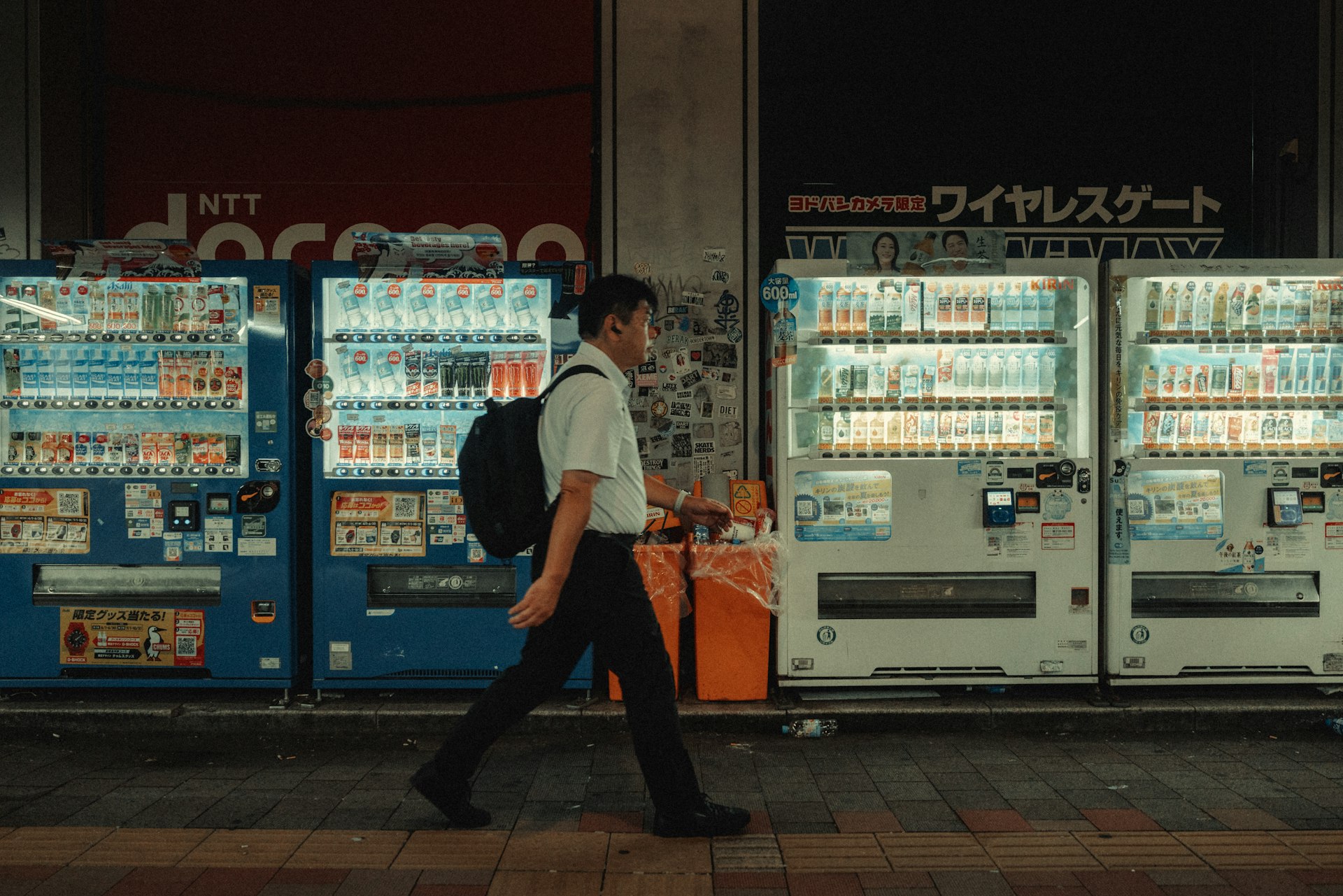
Picture this contrast: a thirty-dollar tonkatsu dinner in a wood-paneled Shinjuku basement, where the owner shakes his head politely at your Visa and points to a tray for yen banknotes. Ten minutes later, a vending machine on the street corner cheerfully beeps as you tap a Suica card for a hot can of coffee. Welcome to Japan in 2026 — a country that builds the world’s smartest payment chips and still wants you to bring cash.
Why Japan Stays Cash-Heavy in 2026
Japan’s cash habit isn’t laziness or lack of technology — it’s a deliberate stack of cultural and economic preferences that even a global pandemic only partly nudged. Trust in physical yen runs deep: counterfeiting is rare, ATMs are plentiful, and small business owners often prefer the simplicity of a register drawer over interchange fees that can run two to three percent on every card swipe.
There is also a generational layer. Many family-run restaurants, ryokan, and shrine offices have operated the same way for decades, and switching to a card terminal means new training, new monthly fees, and a tax footprint that some owners simply prefer to avoid. The government has pushed digital payments since the 2020s, and Tokyo’s chains have largely caught up — but step into a side-street izakaya in Kyoto, a temple shop in Nara, or any small town outside the Shinkansen corridor, and you’ll meet the same cash-first reality your grandparents would have.

The upshot for travelers: cards are increasingly accepted in tourist Tokyo, Osaka, and Kyoto, but “increasingly” is doing a lot of work in that sentence. Plan for a hybrid life — IC card for transit and convenience, yen for everything that feels handmade.
What IC Cards Actually Cover (Suica, Pasmo, ICOCA, Welcome Suica)
The IC card is Japan’s quiet payment superpower. Originally designed as a contactless transit pass, the chip evolved into a low-friction wallet that works at vending machines, convenience stores, coin lockers, taxis, and a growing number of cafes and restaurants. The big names you’ll see are Suica (issued by JR East, dominant in Tokyo), Pasmo (Tokyo’s other transit operator), and ICOCA (JR West, dominant in Osaka and Kyoto). They are mutually interoperable across most of the country, so a Tokyo Suica taps through an Osaka subway gate without complaint.
For visitors, the friendliest option is the Welcome Suica — a tourist-only version with a striking red cherry-blossom design, no deposit required, and a 28-day validity window. You pick it up at the JR East Travel Service Center inside Narita or Haneda airport, load it with yen at a station kiosk, and you’re ready to tap.

A practical note for 2026: physical Suica and Pasmo cards have had on-and-off sales suspensions due to a global semiconductor shortage, but the Welcome Suica for visitors and the mobile Suica in Apple Wallet and Google Wallet have remained available. If you have a fairly recent iPhone or a Google Pixel, you can add a Suica directly to your phone, top it up with a foreign credit card, and skip the kiosk line entirely.
Where You Still Need Yen
Even with an IC card glowing in your pocket, there are corners of Japan where only paper yen will do:
- Small restaurants and izakaya, especially family-run spots with handwritten menus
- Temples and shrines — entry fees, omikuji fortunes, goshuin stamp books
- Rural ryokan, mountain huts, and traditional inns in the Japanese Alps
- Festivals and yatai food stalls during matsuri season
- Coin-operated laundry in budget hotels and hostels
- Some taxis outside major cities, though Tokyo’s fleet now mostly accepts cards
- Tip envelopes at high-end ryokan (rare, but it happens for special service)
A good rule of thumb is to land with about ten thousand yen in your wallet for the first day, then top up at an ATM once you’ve found one that likes your card. Speaking of which — let’s talk exchange rates and ATMs before you arrive.
💱 1USD ≈ 158JPY
ATMs That Actually Take Foreign Cards
This is the part nobody tells you until you’re standing at a Mitsubishi UFJ machine in Ginza watching it reject your card for the third time. Most Japanese bank ATMs are wired for domestic cash cards only, and they will politely refuse anything with a Visa or Mastercard logo on the back. There are exactly three networks you can rely on as a foreign visitor:
7-Bank ATMs — Inside every 7-Eleven konbini, plus stand-alone kiosks in airports and shopping malls. Multilingual interface, accepts Visa, Mastercard, JCB, American Express, UnionPay, and most major debit networks. The withdrawal limit per transaction is typically around one hundred thousand yen, with a small fee that varies by card issuer. */}
Japan Post Bank ATMs — Inside Japan Post offices (yubinkyoku) and many train stations. Slightly more limited hours than 7-Bank, but otherwise reliable for foreign cards. Look for the orange “JP” logo.
Lawson Bank ATMs — Inside Lawson convenience stores. Accepts the same major networks as 7-Bank and is open around the clock in most locations.

A few survival tips: tell your home bank you’re traveling so they don’t freeze the card on the first foreign withdrawal, bring at least two cards from different networks (one Visa, one Mastercard is the classic safety pairing), and avoid withdrawing tiny amounts repeatedly — fixed per-transaction fees from your home bank add up fast. One bigger withdrawal every few days is usually cheaper than five small ones.
The Konbini Workflow: Pay, Bag, Get Out
The Japanese convenience store — konbini — is its own small civilization. 7-Eleven, Lawson, and FamilyMart between them blanket the country, and they have quietly become one of the most foreigner-friendly payment environments in Japan. The workflow is faster than you expect, and the only thing that slows it down is travelers who don’t know the choreography.

Here’s the rhythm. You bring your items to the counter. The clerk scans, names the total in Japanese, and — crucially — gestures at a small payment terminal facing you. That terminal is your moment to choose: tap your IC card, tap a credit card, hand over cash, or wave your phone for Apple Pay or Google Wallet. The clerk doesn’t usually ask which method you want — they wait for you to act. Once payment clears, you bag your own items at a small side counter (the clerk won’t bag for you in most stores), grab your receipt, and you’re out.
Two phrases that smooth the whole thing along: “Suica de” (“with Suica”) and “genkin de” (“with cash”). Say either as the clerk hits the total and you’ll skip the awkward terminal-gesture pause entirely.
Is Apple Pay or Google Wallet Useful?
Short answer: yes, more than you’d expect, but with caveats. If you can add a Suica to your phone, you essentially have a contactless transit-and-payment card in your pocket that you can top up from a foreign credit card without ever visiting a kiosk. Apple Pay on a recent iPhone handles Suica, QUICPay, and ID natively in Japan — the last two are domestic credit-card network protocols that some Japanese retailers prefer over the Visa or Mastercard contactless rails.
Google Wallet on a Pixel or recent Android device also supports mobile Suica, with the same top-up flexibility. Older Android phones bought outside Japan often can’t add a Suica due to NFC chip differences — check before you fly.
FAQs
Can I get a Welcome Suica at Narita or Haneda?
Yes. The JR East Travel Service Center at both airports issues Welcome Suica cards on the spot — bring your passport, pay cash for the initial load, and you’re ready before you’ve left the terminal. Hours are roughly the same as airport business hours; arrive at three in the morning and you’ll wait until the counter opens.
Are credit cards accepted in Japan?
In big cities and tourist-heavy districts, yes — most hotels, department stores, chain restaurants, and Shinkansen ticket offices take Visa, Mastercard, and JCB. Outside that bubble, acceptance drops sharply. Carry cash as your default and treat card acceptance as a pleasant surprise.
Is Apple Pay or Google Wallet useful in Japan?
Very, if you can add a mobile Suica. Without one, your foreign Apple Pay or Google Wallet will work at chains that accept Visa or Mastercard contactless, but you’ll miss out on the much wider IC-card acceptance network at vending machines, transit gates, and smaller shops.
How much cash should I bring on day one?
Ten thousand yen is a reasonable landing amount for one or two travelers — enough to cover the train from the airport, a first meal, and any small purchases before you find a 7-Bank or Lawson ATM. If you’re heading straight to a rural area, double it.
What happens to leftover IC card balance when I leave?
Welcome Suica balances expire after 28 days and are non-refundable. Regular Suica and Pasmo balances can be refunded at JR East or Pasmo ticket offices respectively, with a small handling fee deducted. Mobile Suica balances stay on your phone indefinitely — useful if you’re planning to return.
Sources
- JR East Welcome Suica — official tourist IC card page
- 7-Bank ATM Service — foreign card acceptance and fee details
- Japan Post Bank ATM Service — JP Post ATM network and supported cards
- Tokyo Metro Pasmo — Pasmo card overview and top-up
- JR West ICOCA — ICOCA card for the Osaka and Kyoto region
- Wikivoyage Japan: Money — community-maintained traveler reference
Hero photo: see public/images/blog/japan-cash-or-card-2026-hero.json. Inline photos: see docs/image-licenses/japan-cash-or-card-2026.md.
Heads up! Some links on this page are affiliate links. We may earn a small commission at no extra cost to you. This helps us keep Traveloonie running and free for everyone.
Reviewed by Traveloonie Team, last updated 2026-05-26.