Picture a roadside hot spring at midnight in late June — the sun barely skimming the horizon, steam curling off the water, no headlamp required. Now picture the same pullout in December: pitch black by 4pm, a green ribbon of aurora overhead, and a wind that makes you reconsider your life choices. Iceland’s Ring Road (Route 1) is the same 1,332 km loop year-round, but summer and winter are essentially two different trips. Here’s how to plan seven days around either one.
The Quick Verdict: Summer vs Winter
If you want the whole Ring Road with side trips into the Westfjords or up to Mývatn — go June through August. You get 20+ hours of usable daylight, every mountain pass and F-road is open, and weather is merely “Icelandic” rather than actively hostile. Downsides: peak prices, packed parking at Seljalandsfoss, and you won’t see the aurora (the sky never gets dark enough).
If you came for northern lights and ice caves — go late November through February. The trade-off is real: daylight shrinks to roughly 4-5 hours around the winter solstice, the north and east stretches of Route 1 close intermittently for storms, and rental insurance becomes load-bearing. A winter “Ring Road” trip often becomes a “South Coast + Reykjavík” trip when a storm shuts the eastern fjords.
Shoulder season (late September, early May) splits the difference: ~12 hours of daylight, lower prices, aurora possible in September, and most of the loop driveable in a 2WD if conditions cooperate.

Day 1-2: Reykjavík + Golden Circle Warm-Up
Land at Keflavík, grab the rental, and resist the urge to start driving Route 1 immediately. Spend your first afternoon in Reykjavík — Hallgrímskirkja, the harbour, a cinnamon bun at Brauð & Co — and let the jet lag settle.
Day 2 is the Golden Circle: Þingvellir (the continental rift), Geysir (the geothermal field that gave every other geyser its name), and Gullfoss (the two-tiered waterfall). It’s touristy and unmissable, and it’s also a soft launch — you’re never more than 90 minutes from Reykjavík, which is forgiving if winter weather gets weird. Loop back via the Secret Lagoon or Laugarvatn Fontana for a soak.
Day 3-4: South Coast (Seljalandsfoss, Skógafoss, Jökulsárlón)
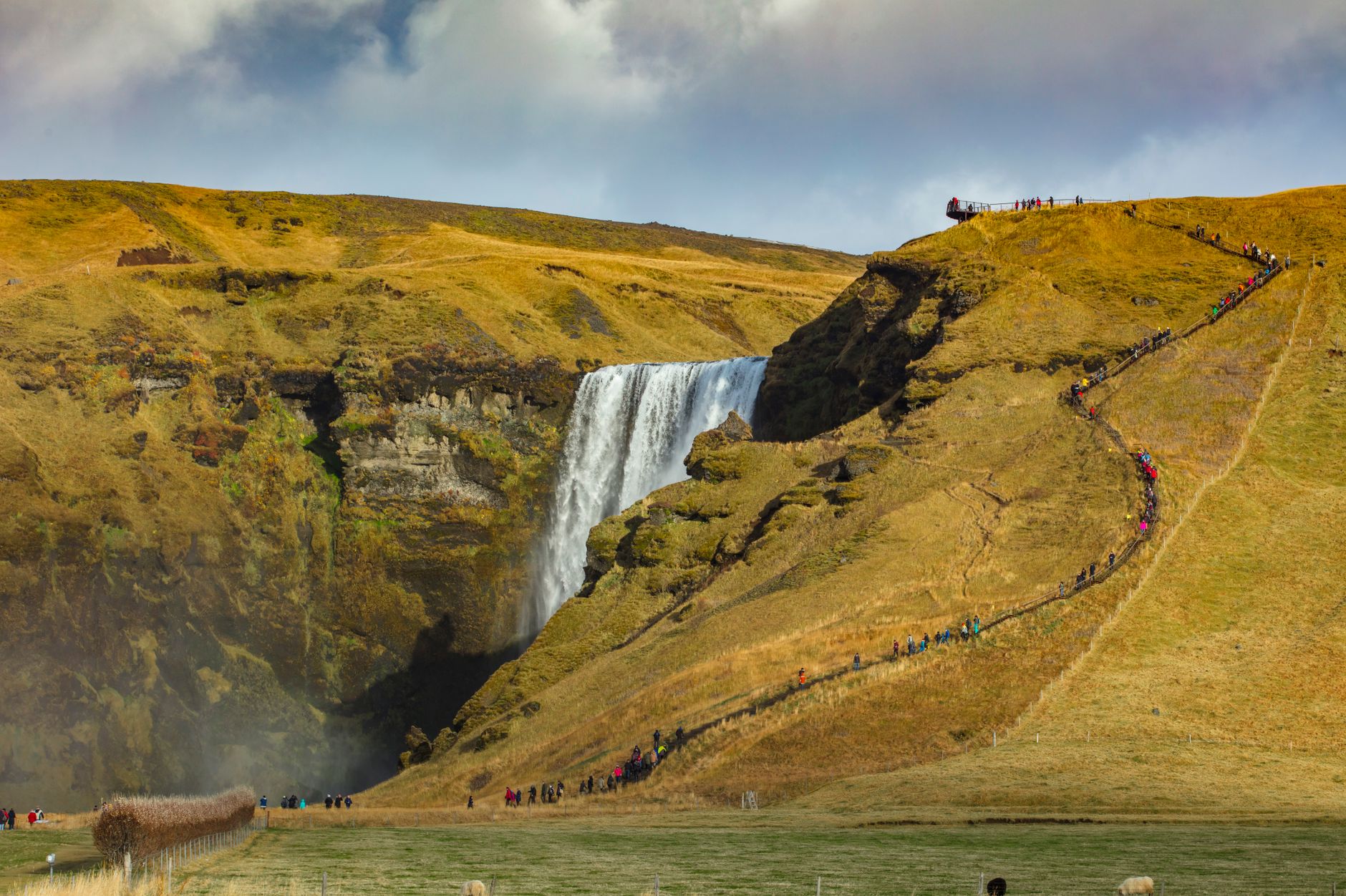
This is the stretch every Iceland trip-report fixates on, and for once the hype tracks. Day 3 covers Seljalandsfoss (the one you can walk behind — bring a rain shell), Skógafoss (the postcard one), and the black-sand beach at Reynisfjara. Reynisfjara has sneaker waves that kill tourists most years — stay well back from the waterline, especially when red-flag warnings are posted.
Day 4 pushes east to Jökulsárlón glacier lagoon and Diamond Beach, where icebergs calve off Breiðamerkurjökull, drift across the lagoon, and wash up on black sand. In winter, the ice-cave tours leave from here. In summer, take a zodiac out among the bergs. Either way, sleep in Höfn — you’ve earned langoustine.

Day 5: East Fjords (and the Winter Asterisk)
The East Fjords are the Ring Road’s quiet stretch — narrow road hugging cliff-walls, reindeer crossings, fishing villages of 400 people, and one mountain pass (Öxi, Route 939) that’s a summer-only shortcut. In summer, this day is a slow scenic crawl with photo stops every ten minutes. In winter, this is the day most likely to derail your plan — Route 1 between Höfn and Egilsstaðir closes for storms, sometimes for 24-48 hours. Check road.is before you leave Höfn, every morning, no exceptions.
If the road’s open, target Seyðisfjörður (the rainbow-street town from The Secret Life of Walter Mitty) and sleep in Egilsstaðir. If it’s closed, the honest move is to backtrack along the south coast and add a night somewhere you already passed — there is no rescue helicopter for a busted itinerary.
Day 6: North — Mývatn, Akureyri, Whale-Watching
Lake Mývatn is geothermal-Iceland concentrated: pseudocraters, lava fields at Dimmuborgir, the Mývatn Nature Baths (the north’s quieter answer to the Blue Lagoon), and a sulphur field at Hverir that smells exactly as advertised. Push west to Akureyri, Iceland’s “northern capital” (population ~19,000), for whale-watching out of Húsavík or Akureyri itself. Humpbacks are near-guaranteed June-August; in winter, blue whales sometimes appear, but tour frequency drops sharply.

Day 7: West to Snæfellsnes & Return
The last day is a choice: hammer the remaining ~390 km of Route 1 back to Reykjavík and call it a loop, or detour onto the Snæfellsnes Peninsula (“Iceland in miniature”) for Kirkjufell, Djúpalónssandur black beach, and the glacier-capped volcano that anchored Jules Verne’s Journey to the Centre of the Earth. Snæfellsnes adds maybe 4 hours of driving and is, honestly, worth it if you have an evening flight rather than a morning one.
If you’re flying out the next day, sleep in Borgarnes or back in Reykjavík and return the car with a full tank — fuel inside Keflavík airport pricing is punishing.
What to Pack
Iceland’s weather doesn’t care what month it is. Even in July, expect a sideways-rain day. Layers, waterproof shell, waterproof boots, and a daypack that survives being thrown in and out of the car a dozen times.
A swimsuit and quick-dry towel live in your daypack — hot springs aren’t a special occasion here, they’re a Tuesday. In winter add: traction cleats (Yaktrax-style), a real insulated parka, gloves you can drive in, and a headlamp.

Money, Road Conditions, Apps
Iceland is genuinely expensive — not Tokyo-expensive, not Zurich-expensive, but expensive enough that the budget surprise is real. A casual sit-down dinner runs 6,000-9,000 ISK per person before drinks. Coffee is 700-900 ISK. Fuel hovered near 320 ISK per litre at the time of writing.
Cards work everywhere — even the unattended fuel pumps in the East Fjords — but your card needs a 4-digit PIN, not just contactless. Bring a backup card on a different network (Visa + Mastercard) because the unattended pumps occasionally refuse one brand for opaque reasons.
Apps to install before you fly:
- road.is (or the Vegagerðin app) — official road conditions, updated continuously
- SafeTravel.is — file your travel plan, get text alerts for severe weather
- Veður / vedur.is — Met Office forecasts, including aurora forecast
- 112 Iceland — emergency button + passive location-sharing for hikers
FAQs
Is the Ring Road drivable in winter?
Most of it, most of the time, but not predictably. The south coast and the Reykjavík-to-Akureyri segment (via the north) are kept clear aggressively. The East Fjords stretch is the weak link — multi-day closures are routine in January and February. Plan a winter “Ring Road” trip with a built-in escape valve: if the east closes, you go back the way you came and lengthen days you already enjoyed.
Do I need a 4x4?
In summer, no — a 2WD is fine for Route 1 and all paved sights. You only need a 4x4 (and specifically a high-clearance one) for F-roads into the highlands (Landmannalaugar, Þórsmörk), which are summer-only anyway. In winter, a 4x4 with proper studded winter tyres is strongly recommended even on Route 1; rental companies in Iceland are required to fit winter tyres in season, but the AWD upgrade is on you.
How much daylight in December vs June?
Around the summer solstice (June 21), Reykjavík gets roughly 21 hours of sun above the horizon and never really goes dark — civil twilight bridges the gap. Around the winter solstice (December 21), sunrise is around 11:20am and sunset around 3:30pm — about 4 hours 7 minutes of actual sunlight. The further north you go (Akureyri, Mývatn), the more extreme it gets.
Is Iceland really as expensive as people say?
Yes, but the spike is mostly food and alcohol. Lodging in shoulder season is reasonable by Western European standards, the rental car is the rental car, and most natural sights are free. The grocery hack — buy lunch fixings at Bónus or Krónan, eat in the car at the trailhead — saves serious money. A beer at a Reykjavík bar will still cost you 1,500-1,800 ISK.
What about the Blue Lagoon — worth it?
Once, maybe, if you’re flying out of Keflavík and have a few hours to kill — it’s 20 minutes from the airport. Otherwise the Mývatn Nature Baths (north) and Sky Lagoon (just outside Reykjavík) deliver similar geothermal-spa experiences with smaller crowds and better views. The Secret Lagoon on the Golden Circle is the budget pick.
Sources
- Visit Iceland — official tourism board
- Icelandic Road Administration (Vegagerðin) — road.is
- SafeTravel.is — trip-plan filing and alerts
- Wikivoyage: Iceland
- Icelandic Met Office (vedur.is) — weather and aurora forecast
- Wikivoyage: Ring Road
Hero photo: see public/images/blog/iceland-ring-road-7-days-hero.json. Inline photos: see docs/image-licenses/iceland-ring-road-7-days.md.
Heads up! Some links on this page are affiliate links. We may earn a small commission at no extra cost to you. This helps us keep Traveloonie running and free for everyone.
Reviewed by Traveloonie Team, last updated 2026-05-30.