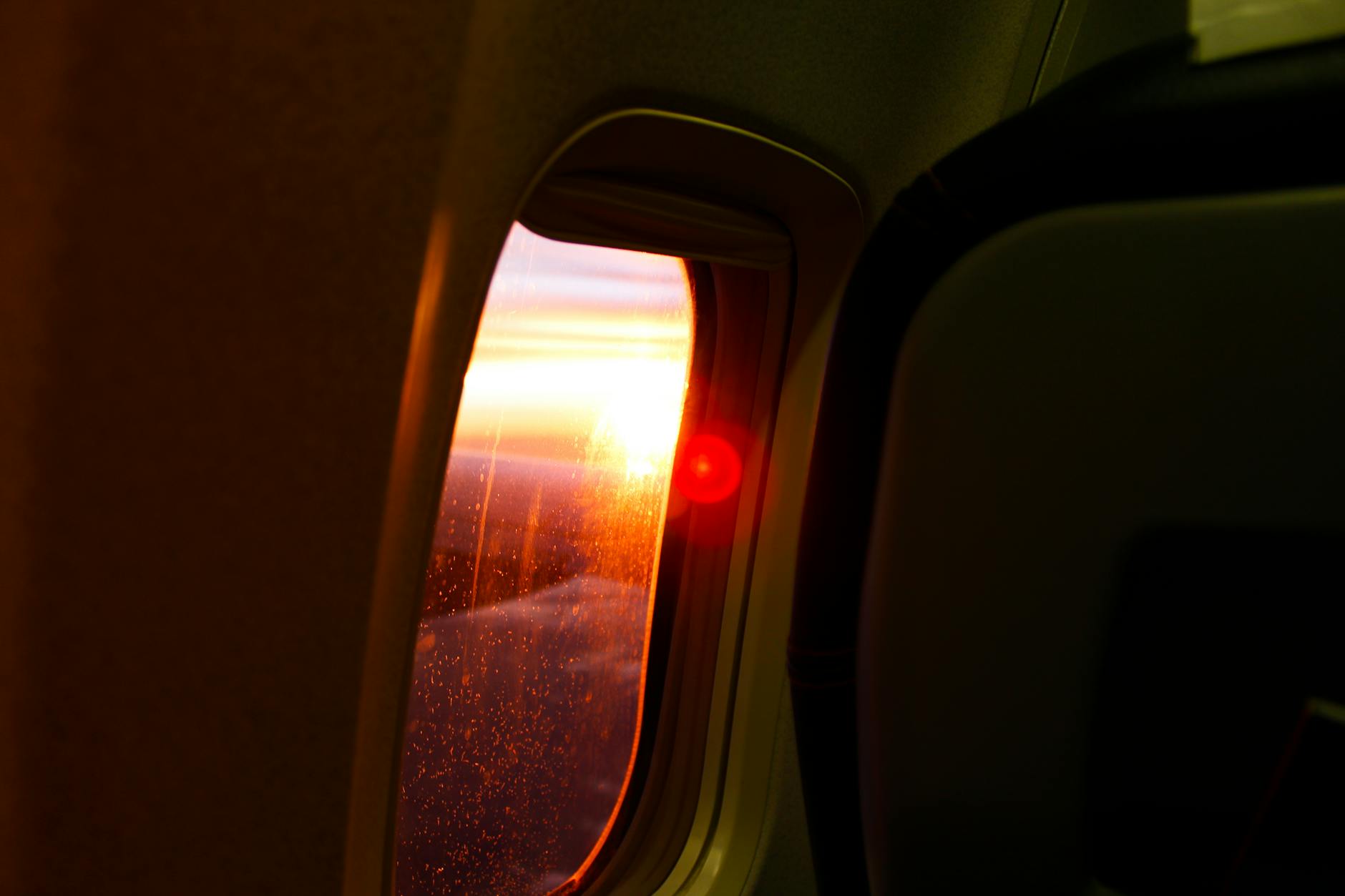
A 13-hour flight from the US east coast to Singapore lands you 12-13 time zones ahead — effectively a near-maximum circadian insult. People routinely report a wrecked week on arrival: 3 AM wake-ups, afternoon collapses, gut chaos. The return flight, covering the same distance, is over in a couple of foggy days. That asymmetry is not in your head. It is the central, well-replicated finding of jet lag chronobiology: eastbound is harder than westbound, and the tools that actually work are the ones that respect the science.
Why Eastbound > Westbound (Circadian Phase-Shifting)
The human circadian pacemaker, anchored in the suprachiasmatic nucleus, runs slightly longer than 24 hours — averaging about 24.2 hours in most adults. That tiny bias means your internal clock naturally drifts later each day. Staying up an extra hour (“phase delay”) is biologically downhill. Going to bed an hour earlier (“phase advance”) is biologically uphill.
Westbound travel asks your clock to phase-delay, which it wants to do anyway. Eastbound travel asks it to phase-advance, which it resists. Most adults can comfortably advance about 1 hour per day; they can delay closer to 1.5 hours per day. So a 12-hour eastbound shift can take 8-12 days to fully resolve without intervention, while the same shift westbound usually resolves in 5-7. This is the single most important mental model for the rest of the article: every tactic below is in service of either advancing (eastbound) or delaying (westbound) your clock.

Light Timing: The Single Highest-Leverage Tool
Light is the dominant zeitgeber — the cue your SCN trusts most. Melatonin matters, meal timing matters, but nothing matches getting bright light into your eyes at the right time, and avoiding it at the wrong time.
The rule, simplified:
- Eastbound (advance your clock): Seek bright morning light at your destination as early as you can stand. Avoid bright light in the late evening — that pushes the clock the wrong way.
- Westbound (delay your clock): Seek bright evening light. Avoid early morning light for the first day or two — wear sunglasses on that early walk if you must be outside.
“Bright” means real outdoor light if possible (10,000+ lux on a clear day, still thousands on overcast). A 10,000-lux therapy lamp for 20-30 minutes is a reasonable indoor substitute when you arrive in winter or land at an inconvenient hour. Phone and laptop screens are not bright enough to meaningfully shift the clock, but they are bright enough to suppress evening melatonin — which is exactly what you do not want when trying to fall asleep on destination time.
Melatonin: Dose, Timing, and What Doctors Actually Say
Melatonin is the most-studied jet lag pharmacological aid and is endorsed by the American Academy of Sleep Medicine for eastward travel across 5+ time zones. But two things matter more than whether you take it: how much, and when.
- Dose: Research consistently finds low doses (0.3-0.5 mg) are as effective as high doses (3-5 mg) for phase-shifting, with fewer next-day grogginess complaints. Most US drugstore bottles sell 3, 5, or even 10 mg — far above the studied range.
- Timing — eastbound: Take it about 30-60 minutes before your destination bedtime, starting on the flight or the night of arrival, for 3-5 nights.
- Timing — westbound: Most travelers do not need melatonin going west; the clock delays on its own. If used, a small dose in the second half of the night (e.g., 4 AM destination time) can help consolidate sleep.
Crucially: talk to your doctor before adding melatonin if you are pregnant, on blood thinners or SSRIs, managing a seizure disorder, or giving it to a child. Melatonin is unregulated as a supplement in the US, so brand-to-brand variability is real — look for USP-verified products.

Meal Timing and Caffeine (Less Useful Than You Think)
Meal timing is a real but secondary zeitgeber. Eating on destination schedule from day one helps peripheral clocks (liver, gut) catch up — which is part of why people feel digestively “off” after long flights. The much-publicized Argonne Anti-Jet-Lag Diet (alternating feast and fast days for four days pre-flight) has mixed evidence and is hard to comply with; modern reviews tend to recommend the simpler version: skip the airline meal that does not match destination time, and eat protein at destination breakfast.
Caffeine is a wakefulness aid, not a phase-shifter. It buys you a few hours of alertness but does nothing to move your clock and will sabotage your destination sleep if taken within ~8 hours of bedtime. Use it strategically on day one to push through to a real destination bedtime — not after lunch.
The Pre-Flight Plan (3 Days Out)
The cheapest intervention is starting before you leave. Three days before an eastbound flight:
- Shift your bedtime 1 hour earlier each night (3 hours total).
- Get bright light immediately on waking — open the curtains, go outside, or use a therapy lamp.
- Avoid bright light and screens for the last hour before that earlier bedtime.
- Optional: small-dose melatonin 30-60 minutes before the new bedtime.
For westbound, do the opposite: push bedtime 1 hour later each night and get bright light in the evening.

Three days will not fully pre-adapt you to a 12-hour shift, but it can knock 1-2 days off the recovery. For shorter shifts (4-6 zones), pre-adaptation can almost eliminate jet lag entirely.
On the Plane: Sleep Where Your Destination Says To
The most common in-flight mistake is sleeping whenever you feel tired. Better: figure out what time it is at your destination, and sleep (or stay awake) accordingly.
- If it is nighttime at the destination during the flight, sleep — eye mask, ear plugs, recline, low-dose melatonin if it is part of your plan.
- If it is daytime at the destination, stay awake — read, watch movies, walk the aisle, hydrate, expose yourself to the cabin reading light.
Hydration is real but oversold: dry cabin air dehydrates you and dehydration makes everything feel worse, but water alone does not shift the circadian clock. Drink to thirst, skip the in-flight alcohol (it fragments sleep and worsens next-day grogginess), and do not over-rely on sleep aids that leave you groggy on landing.

What to Bring
A real eye mask, foam earplugs, and a small light therapy lamp do more than any supplement. If you are crossing voltage regions, you also need to actually be able to plug those tools in.
A universal adapter is the dull-but-essential piece that lets your therapy lamp, phone (for a sunrise alarm), and any electric travel kettle run on arrival — which is when light timing matters most.
FAQs
What melatonin dose is best?
The chronobiology literature consistently points to 0.3-0.5 mg as the most effective phase-shifting dose for healthy adults. Higher doses (3-5 mg) work but cause more grogginess and morning drowsiness without better phase-shifting. Confirm any dose with your doctor — especially if you take other medications.
Does staying hydrated really help?
It helps with the cabin-air dryness symptoms (headache, dry sinuses, fatigue) that overlap with jet lag — so it makes you feel less awful — but water alone does not move your circadian clock. Treat hydration as comfort, not cure.
Is the Argonne anti-jet-lag diet legit?
The original 1980s Argonne protocol has been partially supported but is hard to comply with and has been largely superseded by simpler meal-timing advice: eat on destination schedule from day one, prioritize protein at destination breakfast, and avoid heavy late-night meals during the shift.
How long does jet lag take to fully resolve?
Rule of thumb: about 1 day per time zone eastbound, and roughly half that westbound, without intervention. With pre-adaptation, well-timed light exposure, and judicious melatonin, eastbound recovery can drop to 0.5-0.7 days per zone.
Are jet lag apps worth it?
Reasonably yes. Tools that generate a personalized light/dark/melatonin schedule based on your flight and chronotype implement the same chronobiology research summarized here. They mostly save you from doing the timing math at 2 AM.
Sources
- American Academy of Sleep Medicine — Jet Lag Disorder Clinical Practice Guideline
- NIH / National Heart, Lung, and Blood Institute — Jet Lag Overview
- Argonne National Laboratory — Anti-Jet-Lag Diet
- Chronobiology International — journal of biological rhythms research
- Sleep Foundation — Jet Lag
- CDC Yellow Book — Jet Lag
Hero photo: see public/images/blog/jet-lag-science-2026-hero.json. Inline photos: see docs/image-licenses/jet-lag-science-2026.md.
Heads up! Some links on this page are affiliate links. We may earn a small commission at no extra cost to you. This helps us keep Traveloonie running and free for everyone.
Reviewed by Traveloonie Team, last updated 2026-06-02.