Two blocks from the Spanish Steps, a carbonara costs 38 USD and arrives lukewarm from a microwave. Two blocks further into a residential side street, the same plate is 12 USD, made by a guy whose grandmother taught him, and served with a glass of house white that didn’t come from a bag. Rome rewards the traveler who walks one block past the obvious. This four-day plan is built around that single rule.
The Cardinal Rule: Don’t Eat Within 200m of a Monument
If you can see the Trevi Fountain, the Pantheon, the Spanish Steps, or the Colosseum from a restaurant’s terrace, do not eat there. Period. The food is bad, the prices are tripled, and the coperto (cover charge) is often doubled to 5 USD per person. Walk three or four streets inland — toward Monti, toward Trastevere, toward the Jewish Ghetto, toward Testaccio — and prices roughly halve while quality roughly doubles.
A practical heuristic: if the menu is laminated, has photos of the food, has a hawker out front waving you in, or is translated into six languages, keep walking. If the menu is hand-written in Italian and there are middle-aged Romans eating there at 1:30pm, sit down.

Day 1: Centro Storico Walk-Around
Land, drop bags, and do not nap. Walk. The historic center is compact and the best way to absorb Rome’s scale is on foot the first afternoon. A loose loop: Piazza Navona → Pantheon → Trevi Fountain → Spanish Steps → Piazza del Popolo. Three to four hours, no tickets required, all of it free.
The Pantheon now charges a 5 EUR entry fee for non-residents (Italy introduced it in 2023). Buy the ticket online in advance to skip the queue. Inside, look up: the oculus is open to the sky and rain falls through it onto a slightly convex marble floor that drains via 22 small holes built by the Romans 1,900 years ago.
Dinner in Monti — the neighborhood directly behind the Colosseum and Forum, full of ivy-draped lanes and small trattorias. La Carbonara on Via Panisperna and Trattoria Vecchia Roma are reliable. Budget 25-35 USD per person for a full meal with wine.
Day 2: Vatican (Book Ahead, Go Early)
The single most important booking of your trip. The Vatican Museums sell timed-entry tickets directly at museivaticani.va. Book the 8:00am or 8:30am slot. Walk-up queues in summer can exceed three hours; with a timed ticket you walk past all of it.
Route: Vatican Museums (allow 3 hours) → Sistine Chapel (no photos, no talking, expect to be shushed) → exit directly into St. Peter’s Basilica via the shortcut at the back of the chapel (this saves you 90 minutes of queuing at the basilica’s main entrance, but only group-tour participants and museum visitors who know about the door can use it). The basilica itself is free; the dome climb is 10 EUR (lift) or 8 EUR (stairs, 551 of them).

Dress code is enforced: shoulders covered, knees covered, for both men and women. They will turn you away. A light scarf in your daypack solves this.
Lunch: do not eat anywhere on Via della Conciliazione (the avenue leading to St. Peter’s). Walk five minutes north into Prati, the residential neighborhood behind the Vatican. Bonci Pizzarium near the Cipro metro is a famous Roman pizza-by-the-weight spot, around 6-10 USD for a substantial slab.
Afternoon: Castel Sant’Angelo (12 EUR), the cylindrical fortress on the Tiber. Crossed by the angel-lined Ponte Sant’Angelo, with city views from the top.
Day 3: Colosseum, Forum, Palatine + Trastevere Dinner
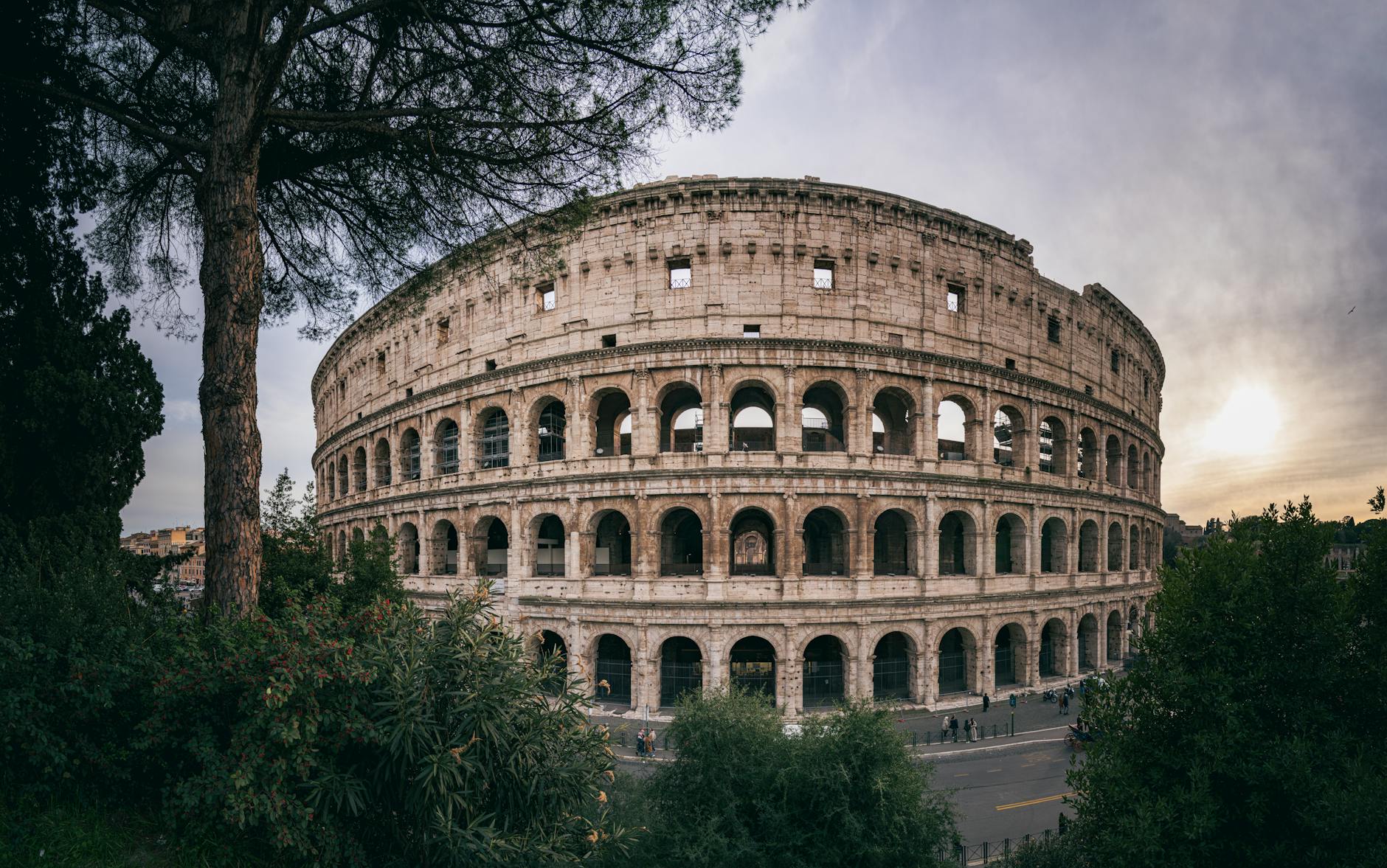
The Colosseum, Roman Forum, and Palatine Hill share a single combined ticket sold by Coopculture at coopculture.it. Buy online in advance. Three options exist: the standard ticket (around 18 EUR), the “Full Experience” with Arena Floor access (around 24 EUR, more memorable, harder to get), and the rarely-available Underground tour (book weeks ahead).
Order: Colosseum first thing in the morning when crowds are thinnest, then Forum, then Palatine Hill. The Forum is largely shadeless — bring water and a hat in summer. Many visitors burn out and skip Palatine, which is a mistake; the views over the Forum from the top of Palatine are the photograph most people came to Rome for.

Late afternoon: cross the Tiber to Trastevere. Wander the cobblestone lanes around Piazza Santa Maria. Dinner in Trastevere is a tradition; reserve ahead at Da Enzo al 29 (cash only, takes reservations only for the first seating around 7pm), or walk in to Tonnarello or Da Teo. The four classic Roman pastas — carbonara, cacio e pepe, amatriciana, gricia — should run 12-16 USD a plate at a good neighborhood spot.
Day 4: Day-Trip Option (Ostia Antica > Pompeii for 1 Day)
Travelers with one free day frequently try to “do Pompeii” from Rome. Don’t. Pompeii is a 4.5-hour round-trip rail journey for a site that genuinely needs 6+ hours on the ground. You’ll arrive tired, rush, and leave at sunset.
Ostia Antica is the better one-day choice. It’s the ancient port city of Rome, 30 minutes by regional train from Roma Porta San Paolo (the Lido line, covered by a standard Rome transit ticket). Ostia is less famous than Pompeii but in many ways more atmospheric: vast, far less crowded, with intact mosaics, an amphitheater, taverns with stone counters still showing wine-jar holes, and apartment blocks four stories tall. Allow 4 hours on site plus travel. Total cost: under 25 USD including entry.
Travelers who genuinely must see Pompeii should add a full extra day and overnight in Naples — it’s a different trip.
Money, Tipping, and the Coperto Trap
Rome runs on euros, contactless cards work nearly everywhere, and ATMs (bancomat) are easy to find. Avoid the orange “Euronet” ATMs in tourist zones — they offer terrible exchange rates via Dynamic Currency Conversion. Always choose “charge in EUR,” never “charge in your home currency,” when an ATM or card terminal asks.
💱 1USD ≈ 0.87EUR
Tipping in Italy is not mandatory and not expected at restaurants the way it is in the US. The coperto (1-3 EUR per person) is a bread/cover charge that’s already on the bill — that is not a tip, it’s a fee. Rounding up 1-2 EUR for good service is generous; 10% is reserved for genuinely exceptional meals. Taxis: round up to the nearest euro.
The “coperto trap” near monuments: some restaurants list a coperto of 5-7 EUR per person buried in fine print, then add a 15% “service” charge on top. Always read the bottom of the menu before sitting down.
Reading the Menu
Roman menus are almost never translated faithfully — even at honest restaurants the English column is approximate. A pocket translator is invaluable for spotting “trippa” (tripe), “coda alla vaccinara” (oxtail), and the difference between “gnocchi alla romana” (semolina, baked) and regular potato gnocchi. The free app handles photos of handwritten chalkboards too.

FAQs
Should I book Vatican tickets in advance?
Yes, always, even in winter. The official site (museivaticani.va) sells timed-entry tickets for a 5 EUR booking fee on top of the standard ticket. Skipping a two-hour queue is worth 5 EUR. Avoid third-party resellers charging 60+ EUR for the same ticket.
Is the Roma Pass worth it?
For a 4-day first-timer, usually no. The 72-hour Roma Pass (around 52 EUR) covers two major sites and public transit. The Colosseum and Vatican Museums (the most expensive entries) are not both included — the Vatican never is. Math out your specific itinerary; for many travelers, individual tickets plus a 24 EUR weekly transit pass come out cheaper.
What’s the coperto?
A per-person cover charge for the table setting, bread, and the right to sit down. Standard in Italy. Typically 1-3 EUR. Legal and not negotiable, but if it’s listed above 4 EUR you’re in a tourist trap — leave.
Is Rome safe at night?
Yes, broadly. Centro Storico, Trastevere, Monti, and Prati are well-lit and busy until late. Petty pickpocketing on the metro and around Termini station is the main concern — use a zipped front pocket, ignore anyone trying to hand you a flower or a friendship bracelet.
How much Italian do I need?
None to get by. “Buongiorno,” “grazie,” “il conto, per favore” (the bill, please), and “scusi” are appreciated. Restaurant staff in central Rome universally speak workable English.
Sources
- Italia.it — Rome
- Vatican Museums — Official Tickets
- Coopculture — Colosseum, Forum, Palatine Tickets
- Wikivoyage — Rome
- Parco Archeologico di Ostia Antica
- ATAC — Rome Public Transport
Hero photo: see public/images/blog/rome-4-days-first-timer-hero.json. Inline photos: see docs/image-licenses/rome-4-days-first-timer.md.
Heads up! Some links on this page are affiliate links. We may earn a small commission at no extra cost to you. This helps us keep Traveloonie running and free for everyone.
Reviewed by Traveloonie Team, last updated 2026-05-31.